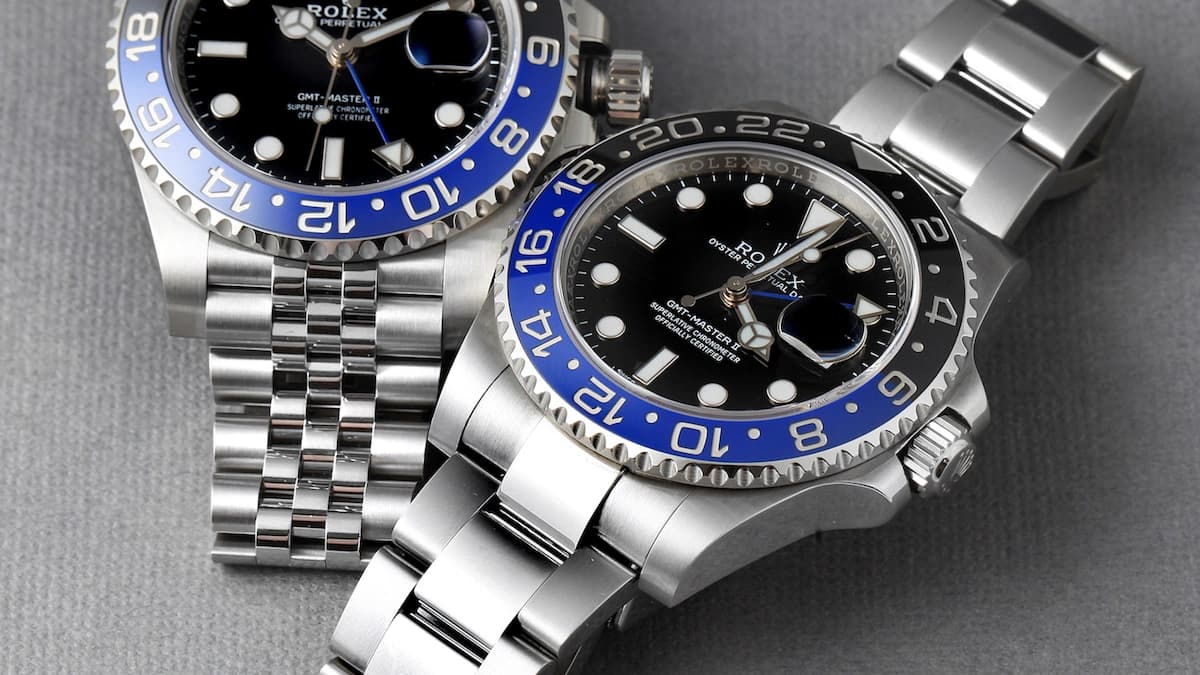
Compare matched Submariner pairs: 114060–124060 and 116613LB–126613LB. Understand the case, movement and power-reserve changes, then assess how they wear.
A 40 mm Submariner and a 41 mm example can look remarkably similar in photographs. Diameter is only part of the decision: movement generation, case shape, bracelet configuration and the condition of the actual timepiece also affect the experience.
First, clarify which generation you mean by “older”. This guide focuses on the 40 mm ceramic-bezel generation before the 2020 update and the 41 mm generation introduced that year. Vintage Submariners from much earlier decades are a separate subject and should not be treated as one undifferentiated older group.
What changed in 2020?
In its 2020 Submariner launch brochure, Rolex announced a redesigned 41 mm case, a remodelled bracelet and new movements for the range: calibre 3230 for the no-date Submariner and calibre 3235 for the Submariner Date.
The update involved the complete product. Asking only “40 or 41 mm?” can overlook the movement, whether you want a date, and the relationship between the watch head and bracelet that you prefer.
To make the comparison clearer, we use two matched pairs: no-date steel models and Date models combining steel with yellow gold. This keeps changes in generation separate from changes in function or material.
Two reference pairs that clarify the generations
Without a date: 114060 and 124060
Rolex's Baselworld 2012 document for the Submariner 114060 lists a 40 mm case, calibre 3130 and approximately 48 hours of power reserve. A copy of this manufacturer brochure is hosted by TheWatch.
The Submariner 124060 has a 41 mm case, calibre 3230 and approximately 70 hours of power reserve. Both suit someone who wants a dial without a date window, making them a useful pair for examining a generational change without changing the functional requirement.
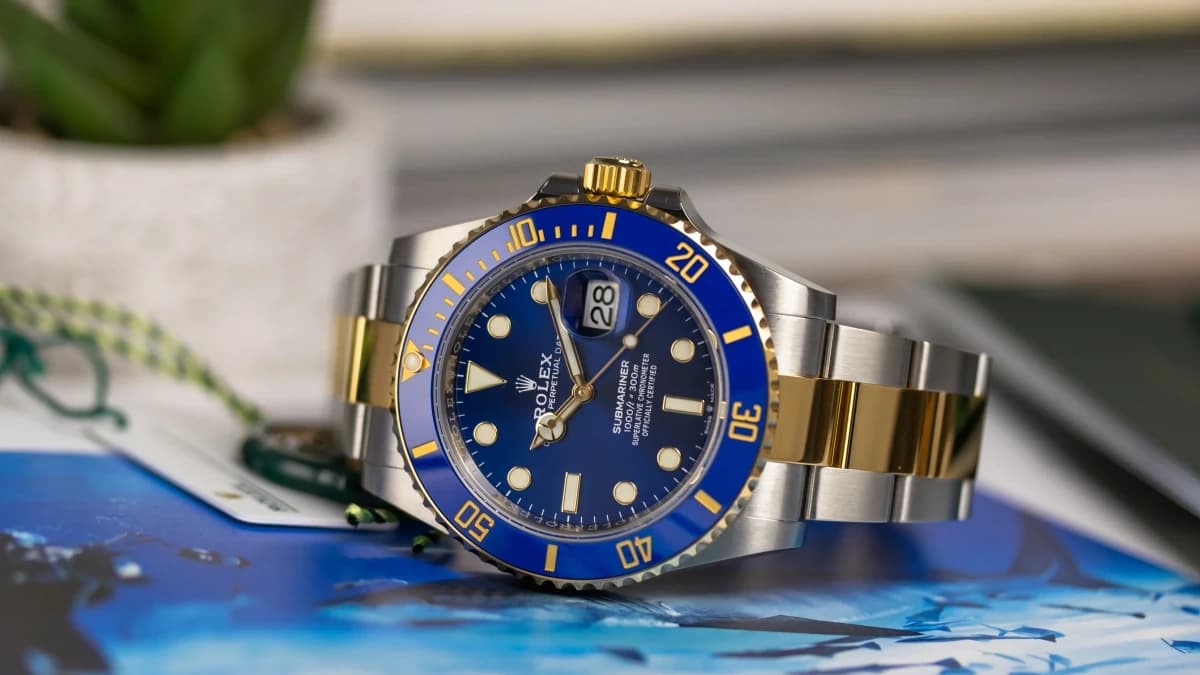
With a date, in steel and yellow gold: 116613LB and 126613LB
For a blue dial and two-tone metal combination, Rolex's 116613LB brochure specifies a 40 mm case, calibre 3135 and approximately 48 hours of power reserve. The 126613LB uses a 41 mm case, calibre 3235 and approximately 70 hours.
These are specific examples within the Date range. The nickname “Bluesy” should not replace a reference number in a comparison. A nickname suggests a style; the reference identifies the generation and configuration.
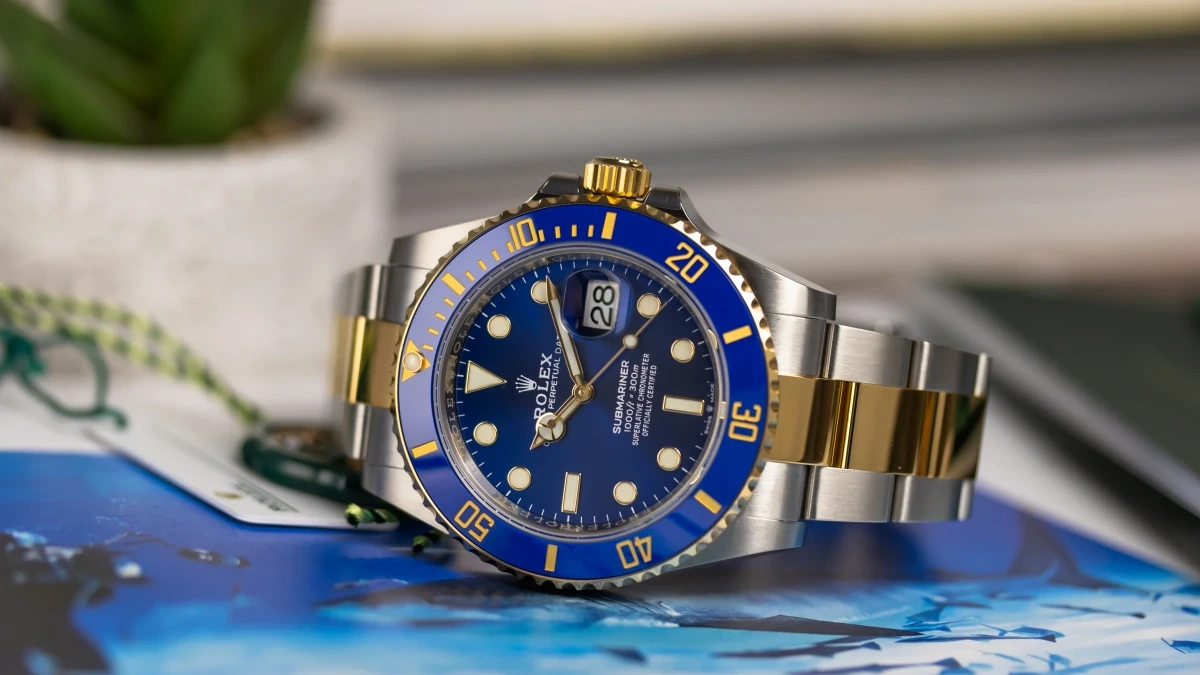
A blue dial and bezel paired with two-tone metal on a Submariner Date. Image source: D.Time Luxury.
Why does one millimetre not settle wrist feel?
A timepiece sits on your wrist through its complete shape and the way its bracelet follows your arm, rather than through its frontal width alone. Consider lug width, the transition from case to first link, the caseback's shape and the clasp's position once the bracelet is adjusted.
The 2020 generation's case and bracelet were redesigned, so it should not be imagined simply as a uniformly enlarged version of the previous model. The 41 mm figure does not prove that it will feel bulkier on every wrist. Equally, 40 mm does not guarantee the more compact experience you may be seeking.
A useful comparison involves wearing both with similarly adjusted bracelets and viewing them from above and from the side. Let your arm rest naturally, bend your wrist and notice where the clasp touches. A close-up phone photograph alone is a poor substitute: angle and distance can alter the apparent proportions.
What does the move from about 48 to 70 hours mean?
For the pairs above, approximately 22 additional hours can matter if you rotate between timepieces. Friday evening to Monday morning is more than two days; a longer reserve offers a larger window of convenience when leaving a watch unworn.
This is an application of the specification, rather than a promise that every example will still be running when you return to it. How fully it was wound, its remaining energy and movement condition all matter. A pre-owned piece needs assessment through its actual operation.
Rolex states that calibres 3230 and 3235 use the Chronergy escapement, with barrel architecture and escapement efficiency contributing to their approximately 70-hour reserve. That information comes from the official Submariner technical overview. A longer reserve alone does not establish superiority in every aspect of servicing or durability.
Glidelock is not exclusive to the 41 mm generation
This distinction can disappear in descriptions of a “new-generation clasp”. The 2012 document already lists Oysterlock and Glidelock for the 114060, with bracelet adjustment in 2 mm increments over approximately 20 mm. The presence of Glidelock therefore does not, by itself, identify a 41 mm timepiece.
For daily wear, the benefit is the ability to achieve a comfortable fit. On the actual piece, check whether the mechanism operates clearly, the clasp holds securely and the adjusted position feels comfortable. Bracelet and clasp condition matter alongside the mechanism's name on a pre-owned example.
For a replica, a Glidelock-style appearance still calls for a functional check. Compatibility also needs confirmation before changing bracelets or components between generations: similar appearance does not establish an interchangeable fit.
Colour does not replace a reference or condition assessment
The Submariner offers different combinations of dial, bezel and material. Placing a green 40 mm example next to a black 41 mm example changes several variables at once. You may prefer the colour without necessarily preferring the generation.
Separate the choice into two stages: first identify the appearance you want, then compare generations and condition within similar options. For an authentic pre-owned timepiece, consider provenance, any replacement components, available service history and the case's present finishing.
A well-kept earlier example can appeal strongly to someone who likes its proportions. A later example may suit someone who values the longer reserve and revised design. There is no need to turn that choice into a verdict that one generation wins in every respect.
Applying the comparison to 1:1 Submariner replicas
The dimensions and calibres above describe authentic Rolex products. With a replica, first identify the original reference the version reproduces, then examine that version's own specification. Dimensions, movement, reserve, clasp feel and water resistance need separate information.
D.Time's selection approach considers appearance, materials, wrist feel and movement operation together. A convincing case shape should be accompanied by a comfortable bracelet and a movement suited to the stated functions. “40 mm”, “41 mm” or a movement number alone cannot replace comparison and individual inspection.
The most useful choice starts with a suitable pair: matching functions, similar visual configurations, then generation and condition. Once these are clear, you can understand what you are choosing beyond the labels “older” and “newer”.