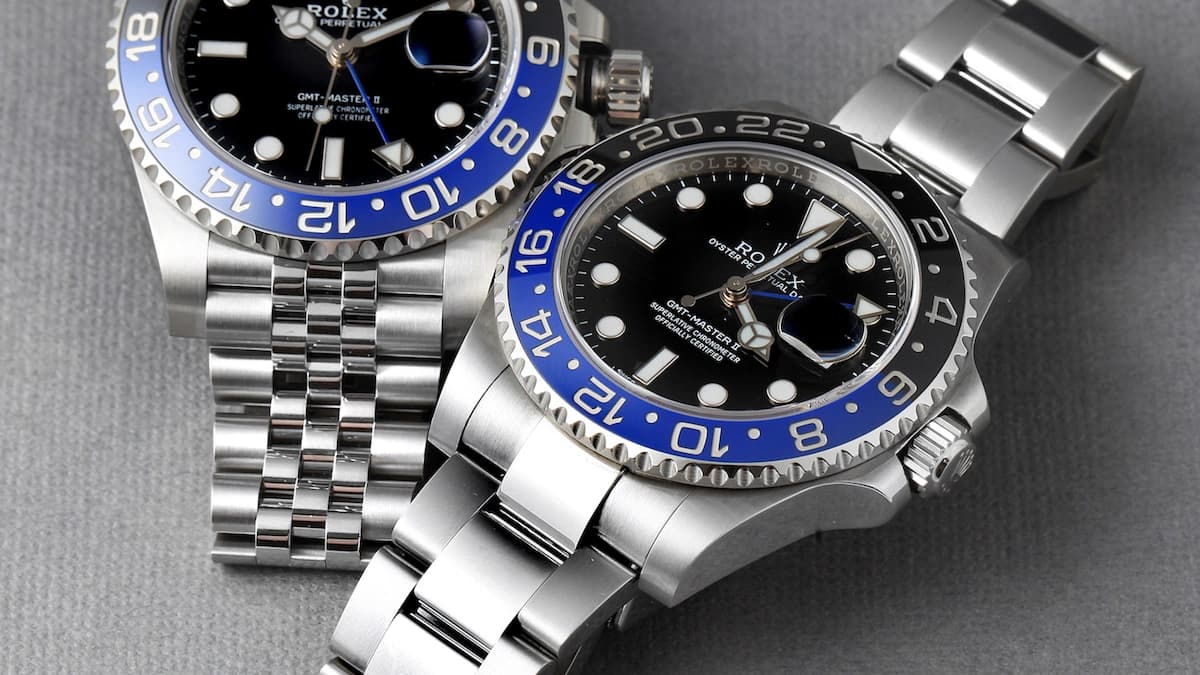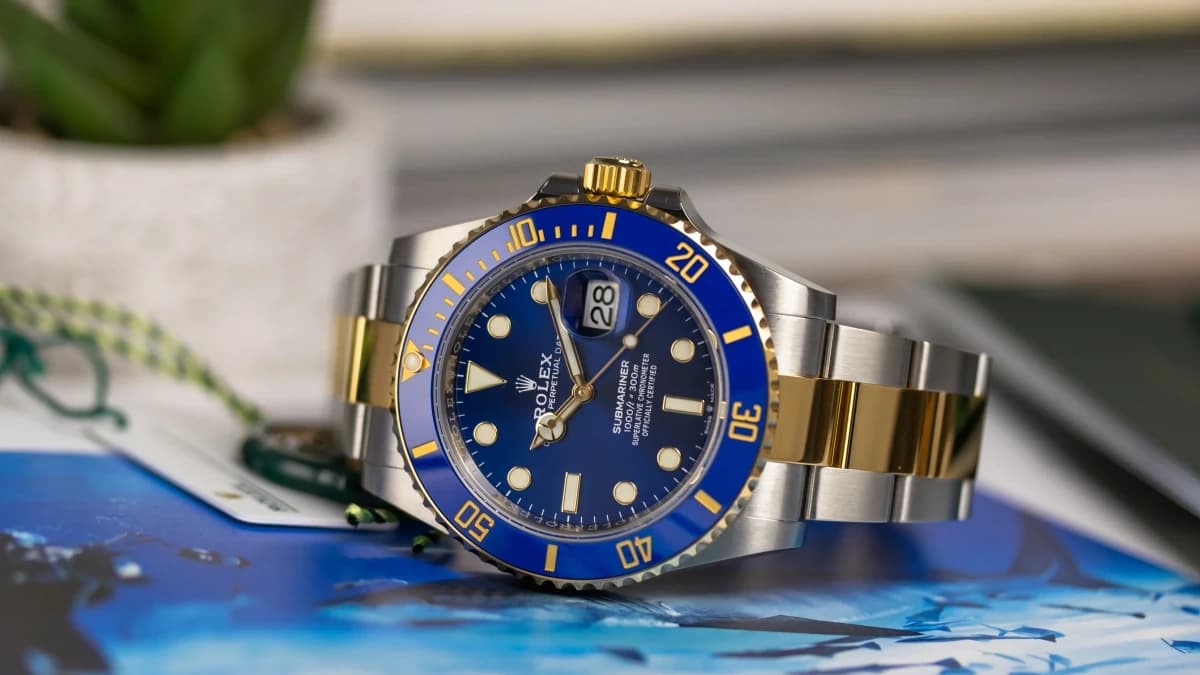
VSF is a name encountered when researching Rolex and Omega replicas. Assessing a particular version means looking at its reference, movement, functions, finishing and the individual timepiece.
You ask about a Submariner replica and receive a short answer: “The VSF version.” It is a starting point, but it leaves the practical questions open. Which reference does it reproduce? What is fitted inside? How has this individual piece been checked, and who will help if it needs attention?
VS Factory, usually shortened to VSF, is a factory name used in the replica market. D.Time Luxury’s introduction to VSF discusses the name in connection with Rolex and Omega replicas. That is seller-provided information; the factory name is not certification from either authentic brand.
The useful way to ask whether a VSF replica is good is to assess a clearly identified version, then inspect the individual timepiece. This guide explains that approach rather than ranking an entire range by the label on a sticker.
Identify the reference before comparing versions
“VSF Submariner” is not a complete description. Establish the authentic reference being reproduced, the presence or absence of a date, the dial and bracelet configuration, and the movement the seller confirms. A polished catalogue image cannot answer all of those questions.
For an authentic comparison, Rolex specifies calibre 3230 for the Submariner and 3235 for the Submariner Date. A difference in date function already involves a different movement. This helps frame questions about a replica; it does not identify what is fitted in one.
Ask for a version description you can keep alongside the actual photographs or video. If it is called a new release, establish what changed: movement, crystal, dial, bracelet or simply the description. The date of the images also matters when an older review is being used to discuss a current offer.
Read a movement name alongside its functions
A movement designation is useful when the seller can explain the configuration and the basis for identifying it. A name containing “3235” does not make a movement Rolex-manufactured. Decorative plates resembling the authentic movement also do not establish the architecture beneath them.
If a description uses “free-sprung” or “free-sprung effect”, ask whether it describes the regulating mechanism or only its appearance. The Rolex documentation linked above describes a variable-inertia balance adjusted with Microstella nuts. Assessing a replica requires its actual architecture and regulating method; visual resemblance does not establish the same mechanism.
For a date model, ask how the calendar is set and request a demonstration following the instructions for the fitted movement. For a GMT, establish whether the local-hour hand or the 24-hour hand adjusts independently. For a chronograph, confirm what each subdial does and whether the timing functions operate fully. Dial layout alone cannot answer these questions.
Omega provides a clear example of why terminology and mechanism must be separated. Omega specifies calibre 8800, a Co-Axial escapement and Master Chronometer certification for Seamaster Diver 300M reference 210.32.42.20.01.001. These belong to the authentic model. Reproduced wording or decoration on a replica does not establish the escapement, magnetic resistance or certification.
Request images that answer specific questions
A useful set shows the front, both case sides, back, bracelet and clasp of the actual timepiece. A straight view reveals the layout; angled views show edges, joins and transitions between polished and brushed surfaces. Lighting can substantially change the apparent dial colour and reflections.
Instead of asking only for attractive photographs, request:
- A near-straight view with clear hands, markers and printing.
- Several date displays, where applicable, rather than a single numeral.
- Evenly lit views of the bezel, crown, case edges and bracelet connections.
- Video of the clasp, relevant functions and the overall fit on a wrist.
Close-ups help assess visible finish, while fit needs a view of the whole design. Bracelet articulation, comfort at the clasp edges and adjustment options may matter more in daily use than a detail visible only under strong magnification.
Keep material and performance claims separate
Surface shine cannot identify a steel grade, and a screw-down crown cannot establish water resistance. When a description lists 904L, sapphire or a water-resistance rating, ask how the claim was established and which piece it covers.
For example, Rolex’s technical page for Submariner Date reference 126610LN describes a Rolex product. Its water-resistance and accuracy specifications must not become promises for a replica with a similar appearance.
Results also need context. Movement readings should have measurement conditions and a date; a water-resistance claim should identify the test performed. One favourable reading cannot describe lifetime reliability or every aspect of performance. Missing information should remain a question to resolve rather than be filled with the authentic model’s figures.
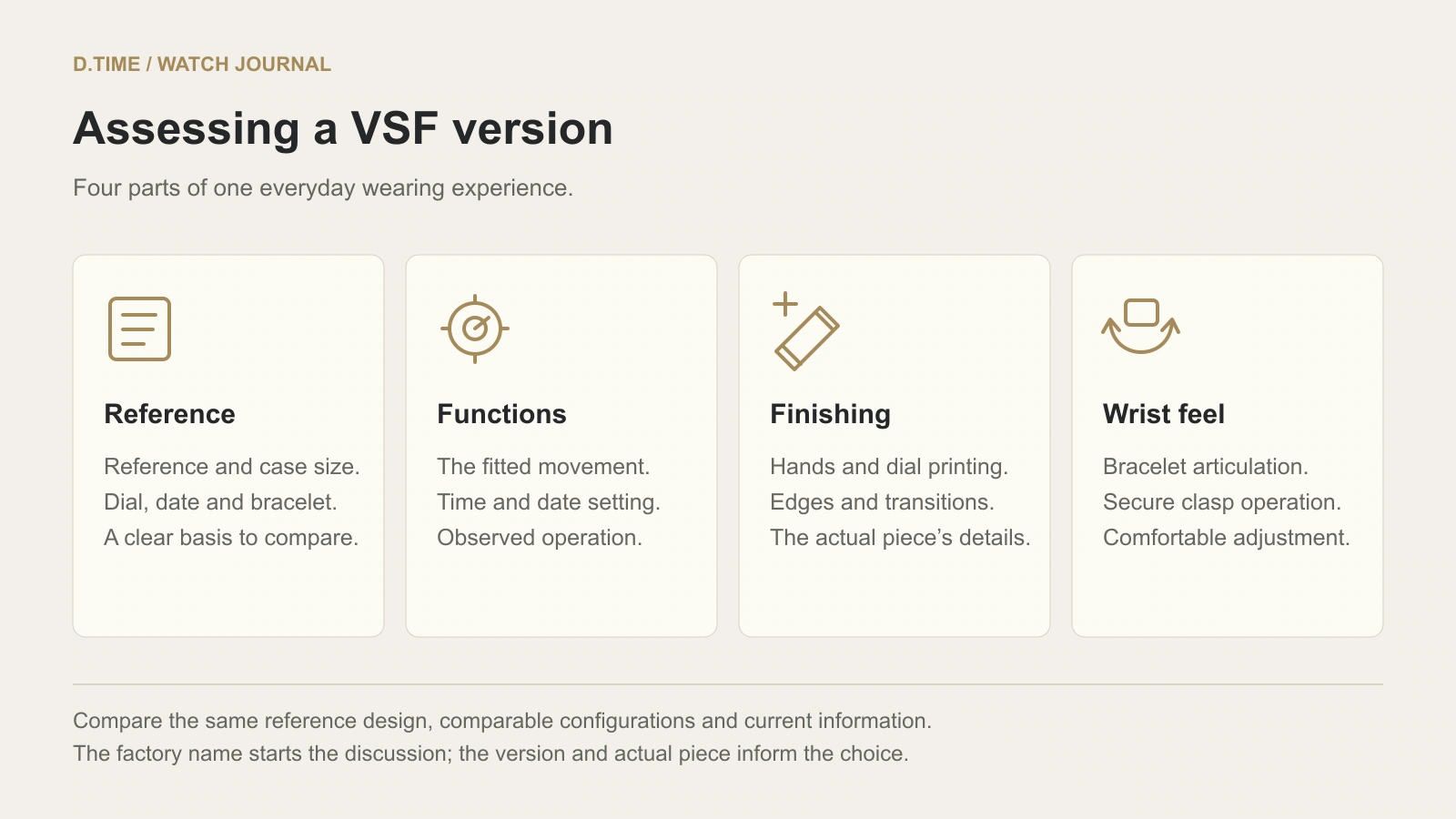
Comparing four areas separately clarifies each version’s strengths and suitability for your wearing habits.
Give competing versions the same comparison task
A meaningful comparison begins with the same reference design, comparable configurations and sufficiently current information. A convincing dial does not automatically mean a better bracelet. The version with the more suitable functions does not necessarily lead in every finishing detail.
Record four areas separately: appearance, materials, feel on the wrist and movement operation. Under each, distinguish what has been observed or confirmed from what remains unknown. This prevents one attractive feature from obscuring an important unanswered functional question.
A report about a factory closure, a new batch or one owner’s experience should not become a universal judgement about every currently offered piece. Without comparable evidence, clarify the two versions being considered rather than manufacture an absolute ranking.
When does a high-end version offer good everyday value?
A worthwhile version brings together what you see and what you use: a clear, balanced dial, comfortable case and bracelet finishing, relevant functions and movement operation supported by inspection of the actual piece. When those elements work well together, a high-end replica can offer a very satisfying wearing experience for the budget assigned to it.
For office wear, bracelet fit, convenient adjustment and easy time reading may deserve more attention than a reproduced detail on the back. If you rotate several timepieces, observed running time and convenient resetting become more relevant. Practical value depends on your habits as well as how closely the design is reproduced.
From the selected version to your individual timepiece
At D.Time, selecting a version and checking each piece are separate stages. We assess appearance, materials, fit and movement operation, then inspect the individual timepiece before delivery. Customers receive photographs or video of the actual piece, connecting the discussion to what they will receive.
For a VSF enquiry, establish four things: the version; the confirmed configuration and functions; the checks performed on the piece; and the arrangements for adjustment or repair. For an international order, clarify the sending and return arrangements for service as well.
The VSF name helps you find a starting point for research. The final decision should rest on a clearly described timepiece, relevant evidence and usable support. That turns a factory-name search into a considered ownership choice.
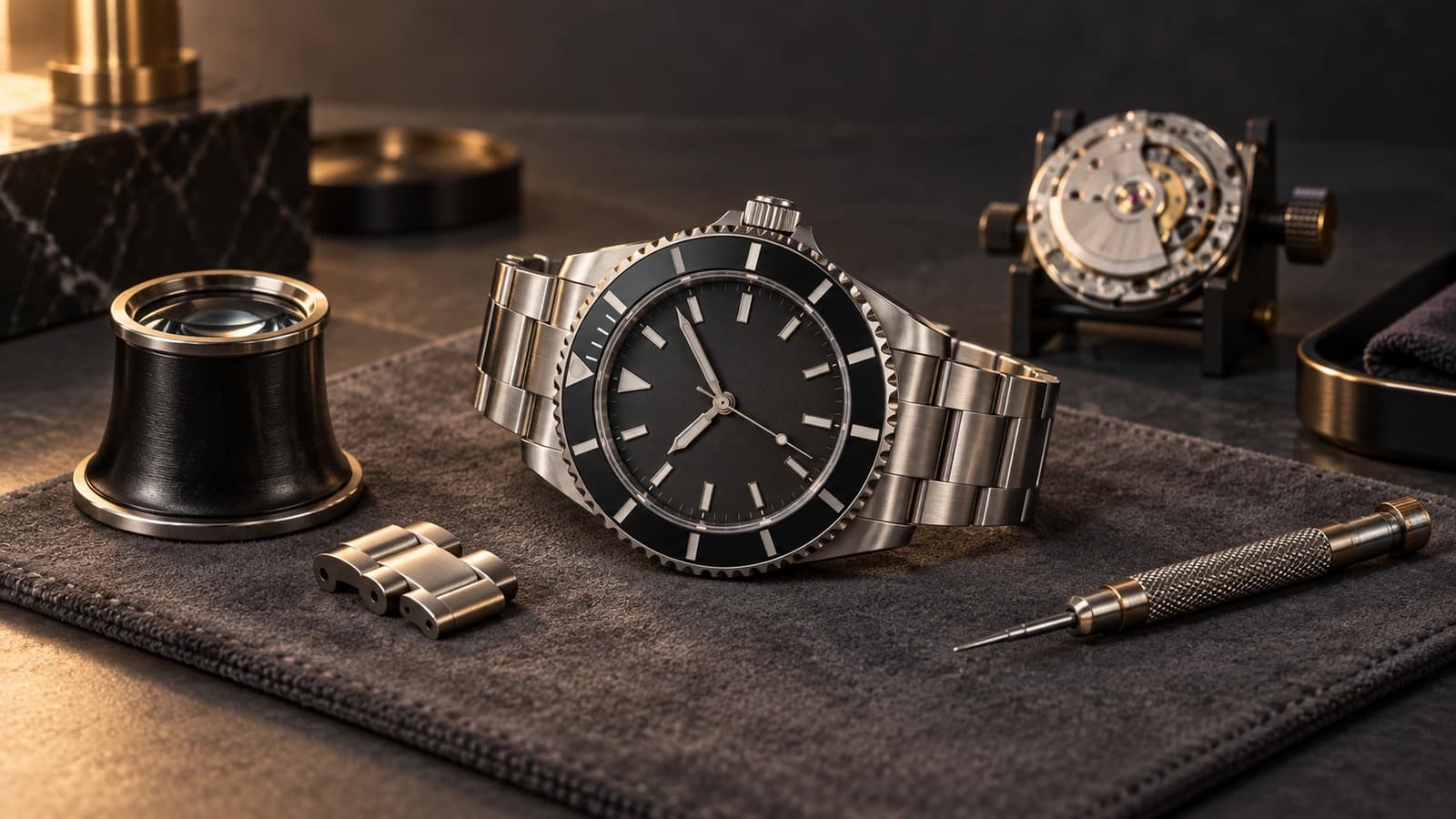
AI-generated editorial illustration of selection and inspection, not a specific VSF product.