Quartz can bring convenience, accurate timekeeping and a slim profile to a luxury timepiece. The useful question is what you want from it, and how the particular model delivers that experience.
You may like the shape of a Cartier Tank, then hesitate on discovering that the reference you want runs on a battery. Behind that hesitation is a familiar assumption: a luxury watch ought to be mechanical. It leaves out much of what makes a timepiece satisfying to wear.
A luxury quartz watch is worth considering when convenience, accurate timekeeping and the right design matter to you. Proportions, finishing, comfort and service still count. Quartz changes the ownership routine; it does not remove those qualities from consideration.
What changes when you choose quartz?
In a battery-powered quartz watch, electrical energy powers a timing system regulated by a quartz crystal. A mechanical movement draws its energy from a mainspring. Cartier explains this distinction in its movement guidance. The practical difference is the routine each requires.
With a functioning battery and movement, you do not need regular wrist time to maintain a power reserve. If a timepiece comes out mainly for meetings or weekends, being able to pick it up and wear it may matter more than winding it each morning. Quartz and mechanical pieces can comfortably serve different roles in one collection.
Convenience is not the absence of all adjustment. You may still need to change the time when travelling or when local daylight-saving arrangements change. An ordinary date display may need correction after shorter months. The battery also remains a service item.
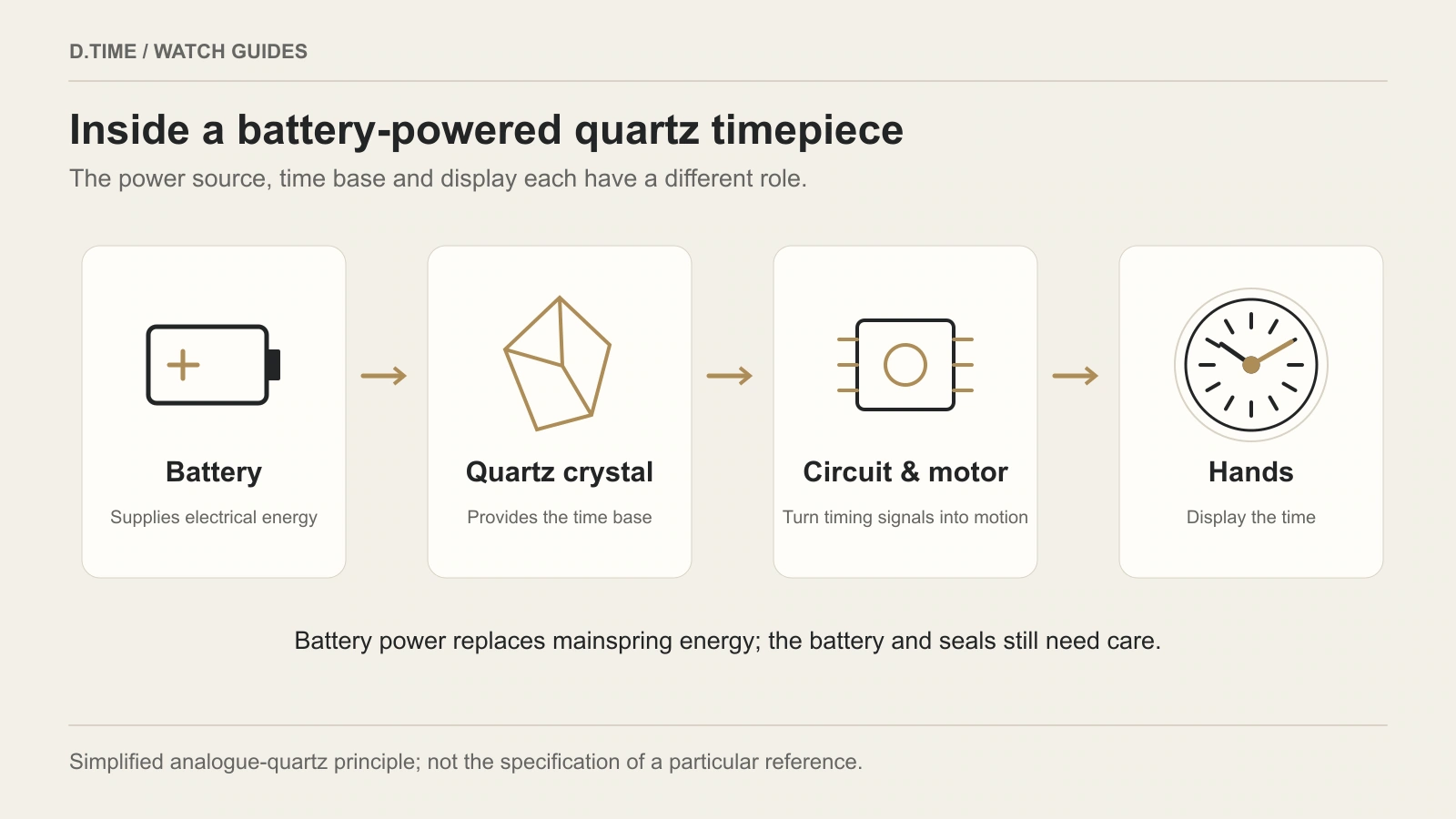
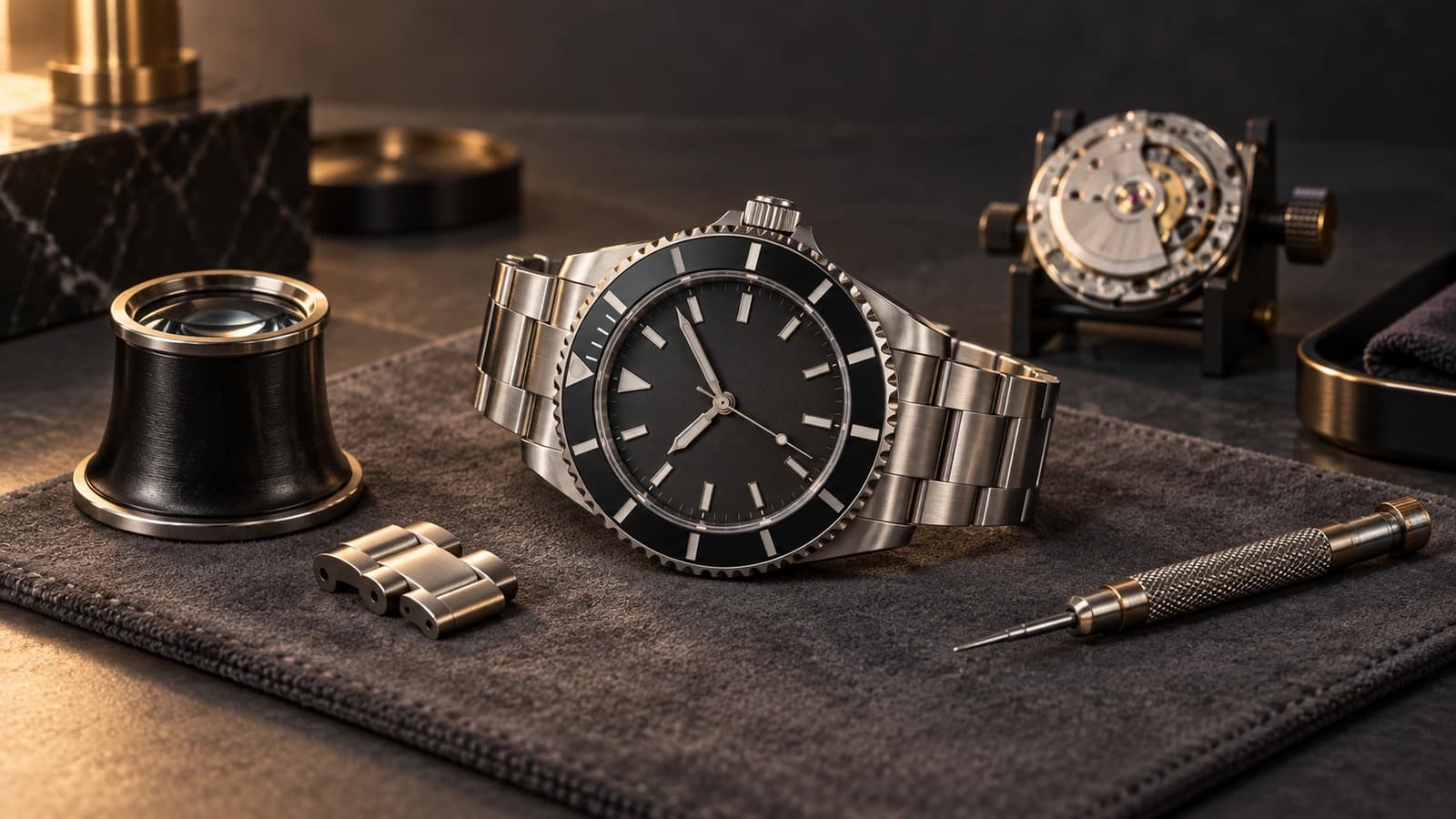
Four different roles within a battery-powered quartz timepiece. A simplified principle, not a particular reference's specification.
The Tank Must puts design at the centre of the decision
Cartier specifies a High Autonomy quartz movement for the Tank Must WSTA0108, with a case measuring 33.7 × 25.5 mm and 6.6 mm thick. It is a concrete example of a slim quartz design, not proof that every quartz watch is thinner than every mechanical one.
Consider how its rectangular outline sits on your wrist, how the strap meets the case and how the whole piece fits beneath a cuff. The movement determines how it operates, while the complete design shapes what you see and feel each time you wear it.
Someone drawn to the Tank's lines may find quartz entirely appropriate. Someone who wants a daily winding ritual may prefer a different reference. Neither preference needs to invalidate the other.
There is engineering to explore in quartz
Quartz describes a family of technology rather than a single specification. The Grand Seiko SBGX261, for example, uses calibre 9F62 with a published accuracy of ±10 seconds per year. That figure does not apply to all quartz watches or to the Cartier above.
Grand Seiko's account of calibre 9F describes mechanisms that stabilise the seconds hand after each step and drive long, substantial hands. Development can therefore concern the quality of the display as well as timekeeping.
Read the units attached to accuracy figures. An annual tolerance is different from a monthly or daily one. A specification also cannot establish the current performance of a particular pre-owned example; its condition requires separate assessment.
Assess the complete timepiece
Set aside the quartz or automatic label briefly. Examine the case edges, dial legibility, bracelet, clasp and fit. Does the design still appeal in ordinary light, away from a display counter?
For an authentic timepiece, design provenance, brand identity and the service network also belong to ownership. They do not, by themselves, determine whether an asking price suits you. Compare the exact reference, condition, accompanying items and service provision. Quartz is not a universal price category beneath mechanical watches.
If your main pleasure comes from observing a movement, winding it or exploring an escapement, a discreet quartz model may leave that interest unsatisfied. If you primarily want an elegant, easy companion, a mechanical movement may add a routine you do not particularly value.
Quartz still needs care
Cartier advises against leaving an exhausted battery inside a watch because it can damage the movement. A stopped or erratic timepiece needs a diagnosis rather than an assumption that a new battery is the complete solution.
Opening the case also raises questions about seals and water resistance. Cartier's battery service description includes the battery and seals. Ask your service provider what the work covers and how functions and water resistance will be checked afterward. Do not assume every battery replacement includes the same process.
For a pre-owned piece, ask about movement condition, repair history and parts support. Running today does not reveal every future service need, just as age alone does not establish that a timepiece is unsuitable for continued use.
Choose around the routine you want
We suggest three questions:
- Will you wear it regularly or return to it after periods in storage?
- Are you most interested in design, fit, timekeeping or the mechanical experience?
- Do you understand the exact model's specification, condition and service options?
For a replica of a quartz design, confirm the movement actually fitted. The authentic reference does not establish the replica's calibre, battery life or accuracy. Visual resemblance cannot replace a functional check.
A thoughtfully chosen quartz timepiece need not be a temporary step towards a mechanical one. It can be a lasting choice when its design and ownership routine deliver what you want.
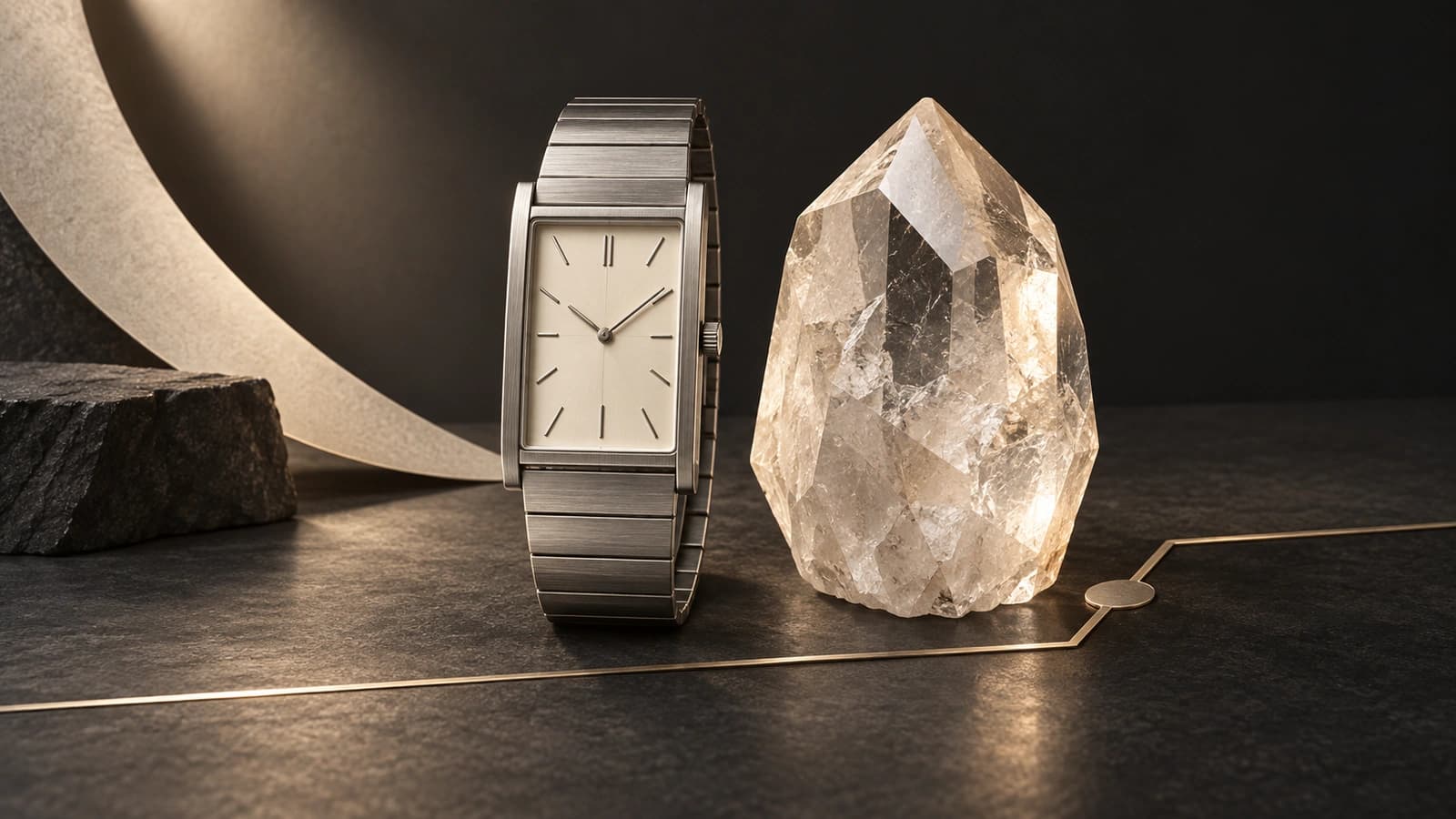
AI-created editorial illustration for D.Time, exploring quartz simplicity; not an actual product photograph.