Leaving out the date can create a more continuous dial layout and remove one setting task. Whether that matters depends on how you read the time, use a date display and rotate your timepieces.
A date window occupies little space, yet can change both the appearance and the routine of a watch. Some people consult it repeatedly. Others find that resetting it whenever they switch timepieces adds a task they do not value.
A no-date watch can offer a more continuous dial layout and one fewer setting step after it stops. In return, it cannot tell you the date at a glance. This is a choice about design and habits rather than evidence that fewer functions necessarily mean a better timepiece.
How a date window changes the dial
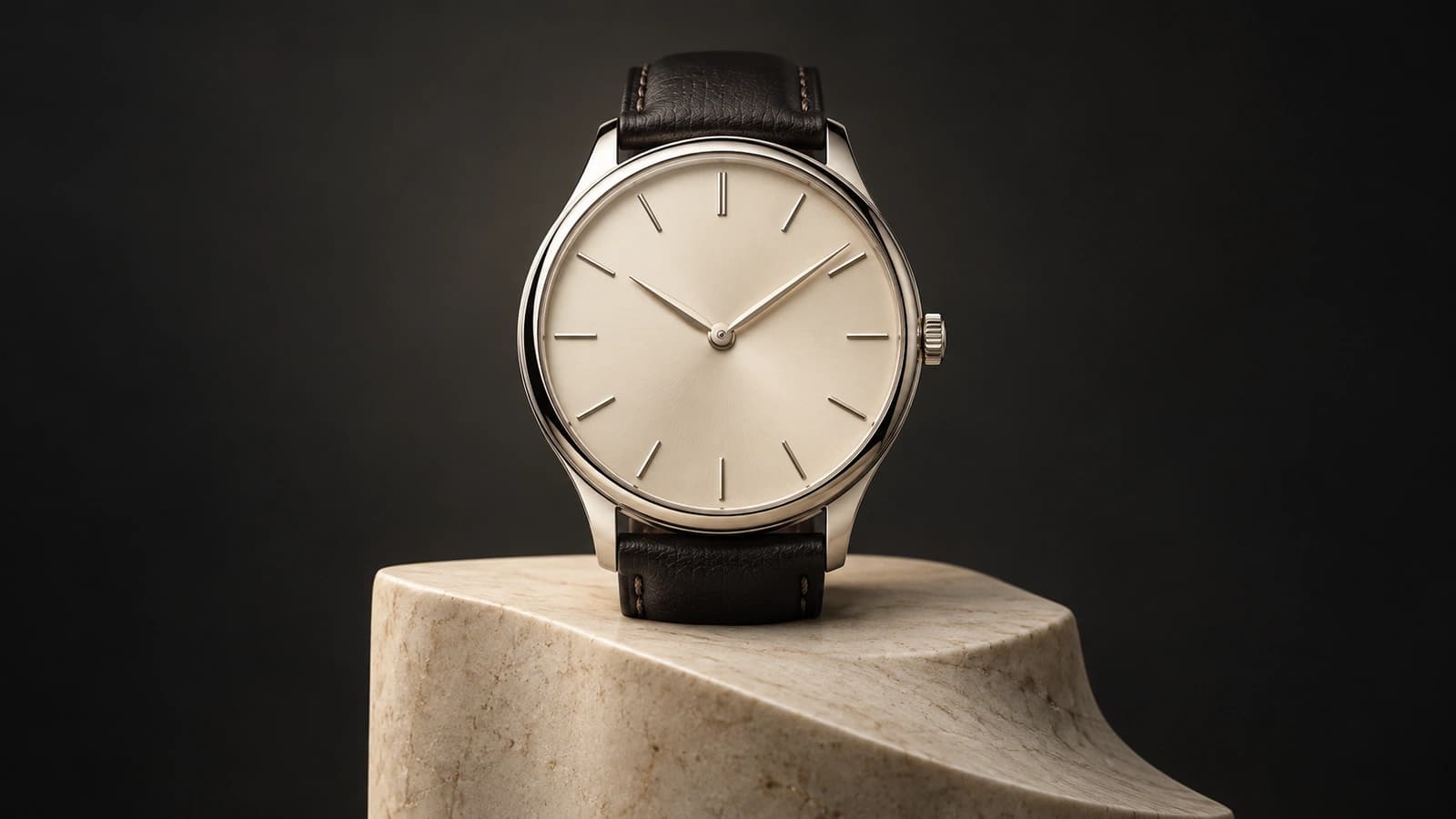
A date aperture introduces another shape, numeral and area of contrast. It may replace an hour marker, sit between markers or become a feature in its own right. Leaving it out allows a designer to keep the rhythm of the hour markers uninterrupted.
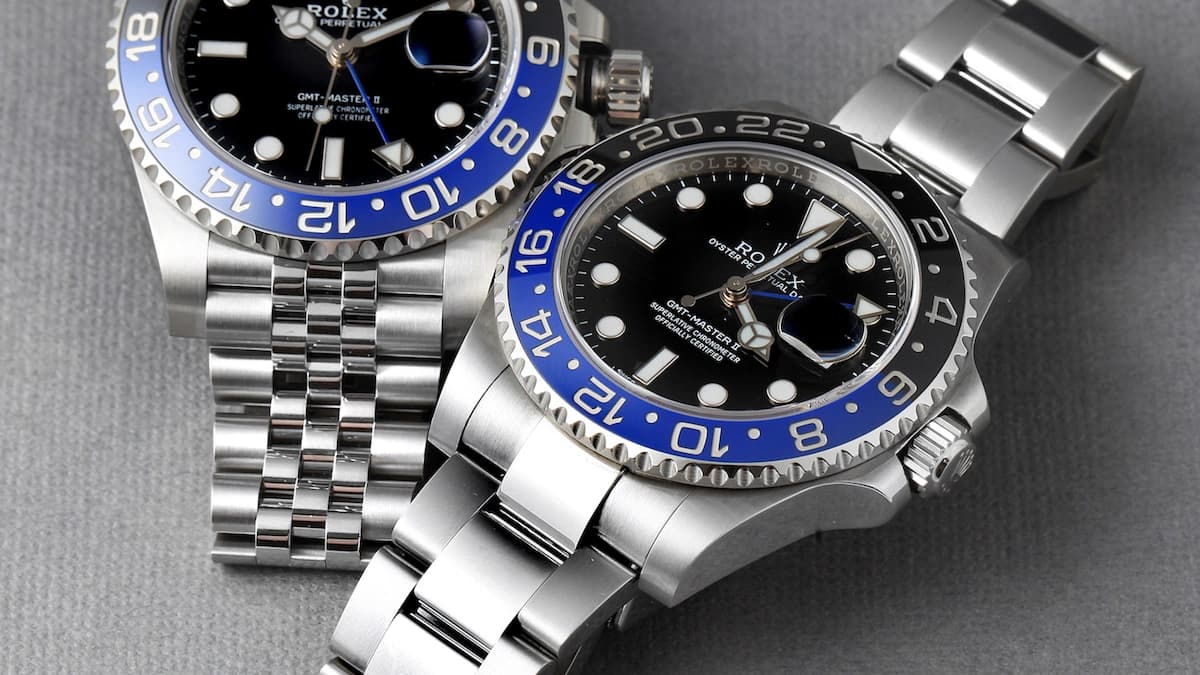
Compare the Rolex Submariner 124060 with the Submariner Date 126610LN. The latter adds a date window and Cyclops magnifier; the former has neither. You may prefer visual continuity or appreciate the conspicuous date display.
That preference is not a universal design rule. A well-integrated date can suit a dial, while a no-date model can still carry extensive text, scales or subdials. No date does not automatically mean minimalist.
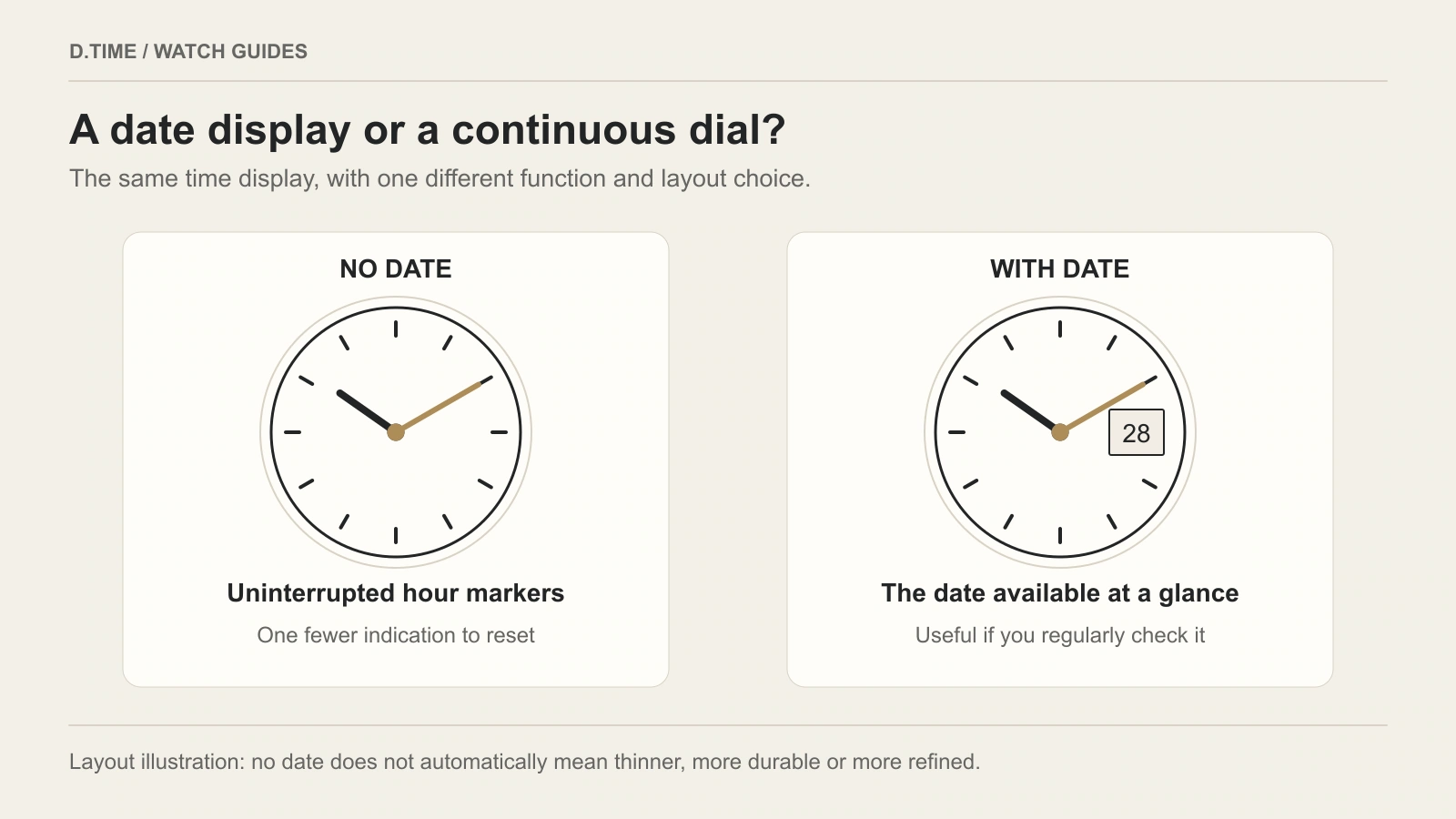
A date window changes both the available information and the dial's visual rhythm. This compares layouts, not durability or thickness.
One fewer task when rotating watches
After a mechanical watch stops, it needs energy and the correct time. With no calendar to display, you do not also need to check the date or align its changeover with midnight rather than midday. This can be particularly convenient for a piece worn only occasionally.
It reduces the setting routine rather than removing care. You still need to follow the winding instructions, set the time and close the crown correctly. Rate performance, seals and servicing remain relevant.
An ordinary date mechanism that cycles through 31 also needs correction after shorter months. Do not extend that statement to every calendar: annual and perpetual calendars handle months differently. Read the function of the actual model rather than treating every date aperture as the same mechanism.
No date does not mean no complications
The Omega Speedmaster Moonwatch Professional 310.30.42.50.01.002 uses the hand-wound calibre 3861 and provides a chronograph and tachymetric scale, without a date window.
It separates two questions: whether you need a calendar and which other functions matter. Someone who times events but rarely consults a wristwatch for the date may find that arrangement useful. A chronograph does not substitute for a date display if the latter is what you use at work.
Counting functions is therefore a poor measure of personal utility. One feature woven into your daily routine may matter more than several you rarely use.
Is a no-date watch more durable or thinner?
Omitting a calendar can remove associated mechanisms from a movement design, but it does not establish greater durability for the complete product. Architecture, manufacture, use and servicing all matter. Without suitable comparative evidence, there is no basis for promising a particular reduction in faults.
Thickness also belongs to the exact reference. The case, crystal, caseback and remaining functions influence overall height. A no-date watch can be thicker than a date model of a different design.
For the two Submariners above, Rolex specifies calibre 3230 for the 124060 and 3235 for the 126610LN. The no-date version should not be described as simply the same timepiece with its date window concealed. Technical and service comparisons need the correct reference and movement.
When is the date worth keeping?
If you regularly date documents, cannot conveniently reach for a phone or instinctively check your wrist for the date, removing it creates an extra step. The cleaner layout needs to be weighed against that loss.
Observe your routine for a few days. When you need the date, do you actually look at your watch, or is it already on the screen in front of you? That small observation may say more than an abstract preference for simplicity.
Legibility matters too. Numeral size, background contrast, aperture position and magnification influence whether the information is readable in one glance. A date you struggle to read may offer less convenience than expected.
Make the choice through use
We suggest a practical comparison:
- View both versions on the wrist at the same distance.
- Consider how often you consult a date display during an ordinary day.
- Think about rotation frequency and your willingness to reset a calendar.
- Read each version's movement, dimensions and operating instructions separately.
For a replica, a dial without a date aperture does not establish a movement without a calendar mechanism. Confirm the actual calibre and crown positions rather than inferring the architecture from the dial. One crown behaviour alone also does not establish overall quality.
A no-date timepiece suits someone who values its layout and wants fewer seldom-used indications to reset. A date model suits someone for whom the calendar belongs in every glance at the wrist. The useful choice is the one where what you gain matters more than what you leave out.
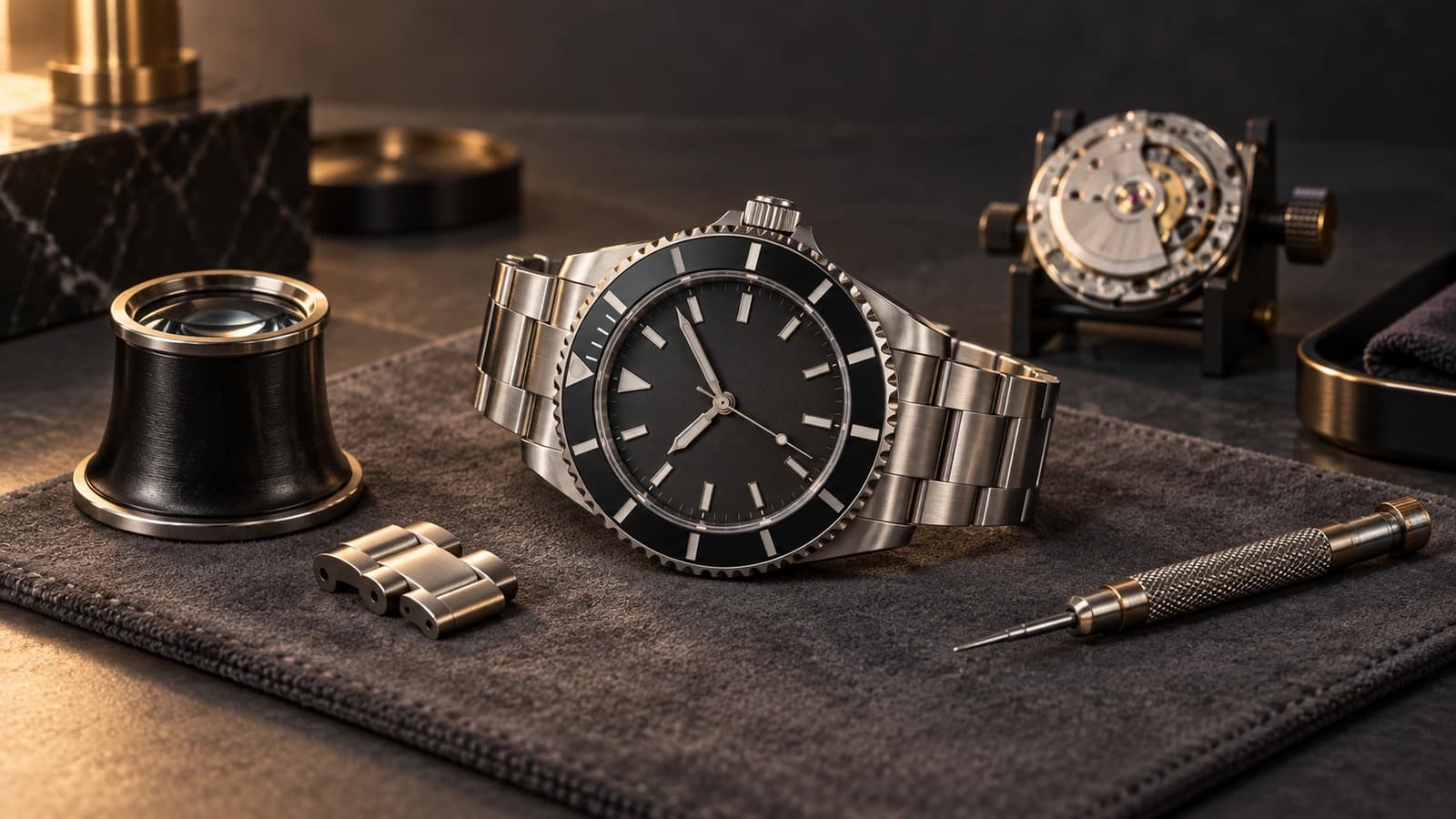
AI-created D.Time editorial illustration of a no-date layout; not a photograph of a model offered for sale.