Appearance is only one part of ownership. Origin, movement, performance evidence, service and personal meaning help clarify the differences between authentic and replica timepieces before you choose.
Place an authentic timepiece beside a replica version and the first question is often how closely they resemble one another. Ownership involves much more than photographs can show: movement behaviour, repairability, responsibility for warranty support and what the object means to you.
The foundational difference is origin: a replica is not produced or authorised by the original brand. Ownership also depends on the actual movement, materials, finishing, certification and responsibility for after-sales support. This article explains how to assess those differences; it does not score a pair of products we have not inspected together.
What separates authentic and replica watches at their origin?
An authentic timepiece originates with the brand it represents and that brand's production system. A replica recreates a design but is not produced or authorised for production by the original brand.
Visual similarity does not change that origin. A model name, emblem or engraving does not independently establish authenticity. This distinction comes before comparisons of materials or timekeeping.
For a pre-owned authentic timepiece, identity, condition and intervention history still require verification. The Rolex Certified Pre-Owned programme, for example, includes authentication and a programme warranty from Rolex. That is a specific service, not something every used timepiece automatically receives.
Compare appearance at the level of individual details
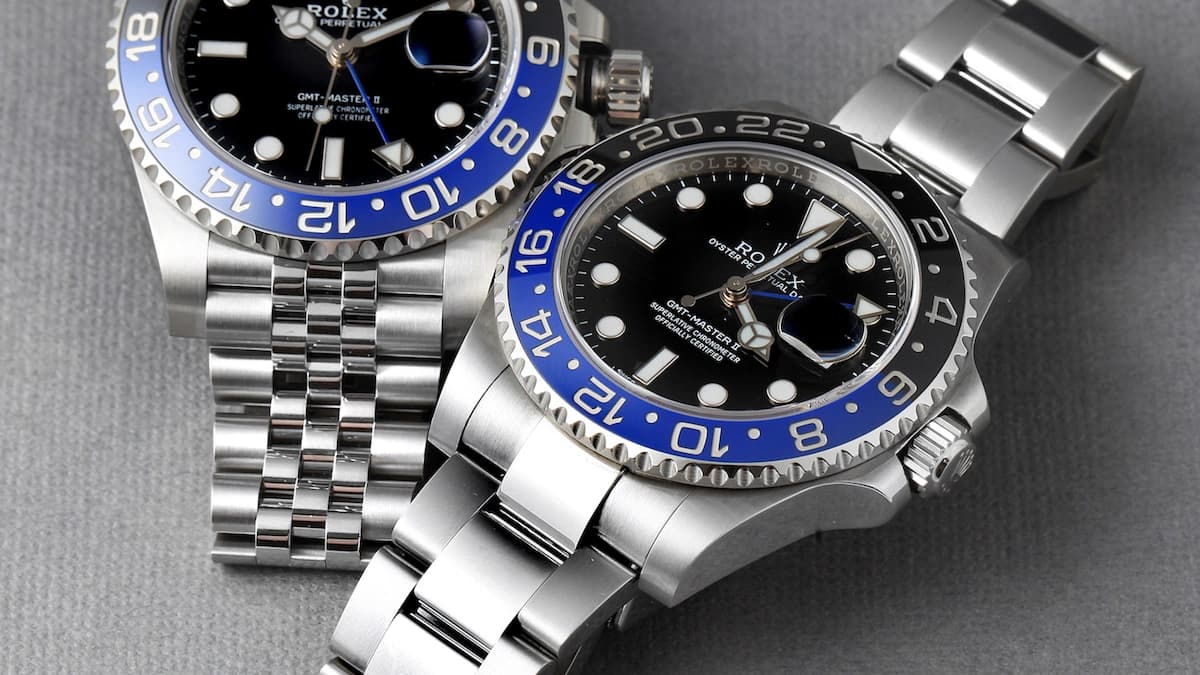
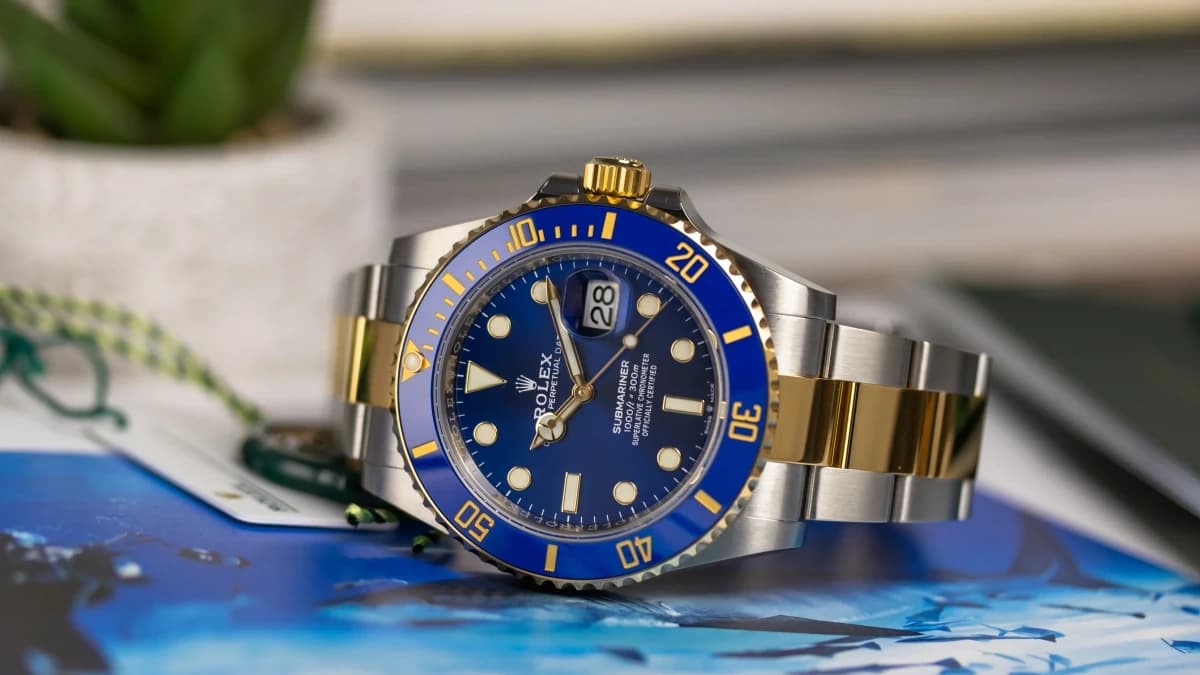
To assess how a design is reproduced, start with proportions: case diameter, lug length, thickness and the placement of dial elements. Then examine printing, markers, hands, date display and how surfaces reflect light.
Use the correct reference and version. Different generations or configurations may differ even when both are authentic. An apparent discrepancy does not establish a reproduction error if the comparison reference was mismatched.
We suggest combining close-ups with complete views. Macro photographs reveal small details; wrist photographs show proportions in use. Each serves a different purpose.
Materials and wrist feel need their own evidence
Metal colour does not identify composition, perceived weight does not establish gold content, and a clear crystal does not identify its material or coating. When one of these properties affects your decision, seek information about the actual timepiece or version.
Even matching steel grades leave machining and finishing to be assessed. Rolex's account of Oystersteel covers both grade 904L and its own processing. It does not establish the quality of another case advertised as 904L.
Assess comfort with a properly sized bracelet. The Cartier Santos de Cartier Large WSSA0018, for example, has SmartLink for bracelet adjustment and QuickSwitch for changing straps. With a replica version of the Santos, check the actual adjustment, interchangeability and fit rather than assuming identical mechanisms or finishing from the model name. Link articulation, clasp position and skin-contact edges still need assessment on the wrist.
A movement name does not establish its construction or performance
Identify the actual movement, how its functions operate and what servicing information is available. Cartier specifies calibre 1847 MC for the Santos WSSA0018 discussed above. That describes the authentic timepiece. For a replica, establish the base movement, construction and actual functions; an engraved calibre marking alone does not establish what lies beneath it.
Compare functions you will use: time setting, calendar, a second time zone or chronograph where present. Matching function names do not establish identical operation or mechanisms. Describe those only after checking the relevant configuration.
Assess performance in separate areas: accuracy, power reserve, winding and operating condition. One strong measurement does not replace the others, and cannot establish equivalent longevity.
Certification applies to the tested product
A certification does not transfer from a design to a reproduction. For example, Omega identifies the Seamaster Diver 300M, reference 210.30.42.20.03.001, as a Master Chronometer powered by calibre 8800. METAS describes the programme through requirements and test cycles for both movements and complete timepieces. Similar wording on a replica dial does not establish that it underwent that programme.
Authentic models also need individual assessment: they do not all have the same certification or water-resistance specification. Conclusions about a replica need evidence for its own version and actual unit.
A pre-delivery test video is useful evidence of what was observed at that time. Clear measurement conditions improve its value. It does not automatically constitute independent certification or establish years of durability.
After-sales support shapes ownership after delivery
Find out where support begins, who performs repairs, how parts are obtained, what costs apply and what the warranty covers. The same number of warranty years does not necessarily mean the same service.
Rolex provides a five-year international guarantee for new timepieces bought from Official Retailers, subject to its conditions. Rolex World Service forms part of the brand's support system. These provisions concern the corresponding Rolex products and terms.
D.Time provides a five-year warranty, returns or exchanges within seven days if a fault is present on receipt, technical support and repairs at cost after warranty. These are D.Time services for timepieces we supply, not the original brand's warranty. Clarify the applicable coverage and service arrangements for your circumstances before purchasing.
Relate the price to what you want to own
For one person, brand history, origin and owning the original product are central to the pleasure. Another may prioritise design, personal style and the wearing experience within a chosen budget. The same person can hold both priorities at different times.
There is no need to assume that a replica buyer cannot afford an authentic timepiece, or that an authentic buyer pays only for a name. Both explanations overlook values that may matter to the individual.
Compare prices for the actual alternatives at the same time, in the same currency and with condition taken into account. Do not assume every replica costs less than every authentic timepiece. Nor should an unsupported promise of resale profit or retained value decide the purchase.
If you later transfer ownership, describe the product's nature and origin honestly. A replica does not carry the brand identity of the authentic timepiece it reproduces.
A carefully selected replica can offer real everyday enjoyment through convincing proportions, comfortable wear and reliably operating functions. That practical value lies in the actual timepiece and the support around it. You can appreciate this experience while recognising origin, certification and the original brand’s system as separate values.
Choose around the values you need
Before deciding, ask yourself:
- Are authentic origin, brand history and the brand's service system essential to me?
- Which specifications, images or checks support the wearing qualities I prioritise?
- Do I know who will handle a problem and which service details still need clarification?
If owning the original product and its supporting system is fundamental, visual similarity cannot replace that value. If you are considering a replica for its design and experience within your chosen budget, assess the actual timepiece and accompanying service with clear expectations about origin and performance evidence.
D.Time selects, individually inspects and supports the timepieces we supply, with photographs or video of the exact timepiece before delivery. That role gives you information for your choice while keeping the replica nature of the product clear.
A suitable choice begins with knowing what you want to own, understanding what the product provides and accepting the remaining differences.
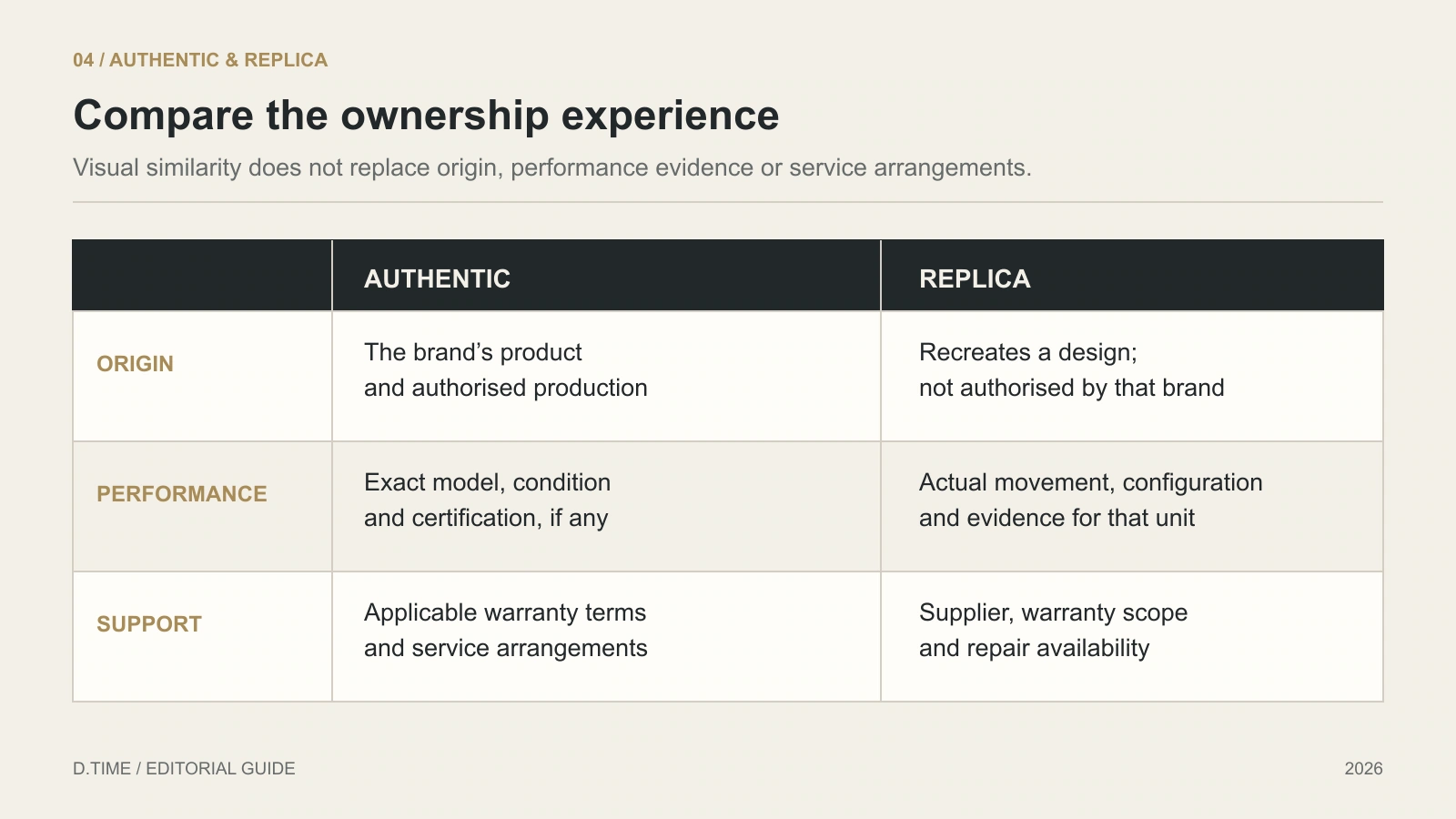
Compare three parts of ownership: origin, performance evidence for the actual timepiece and responsibility for support. Diagram: D.Time.
AI-generated editorial illustration for D.Time; not a photograph of an actual product.