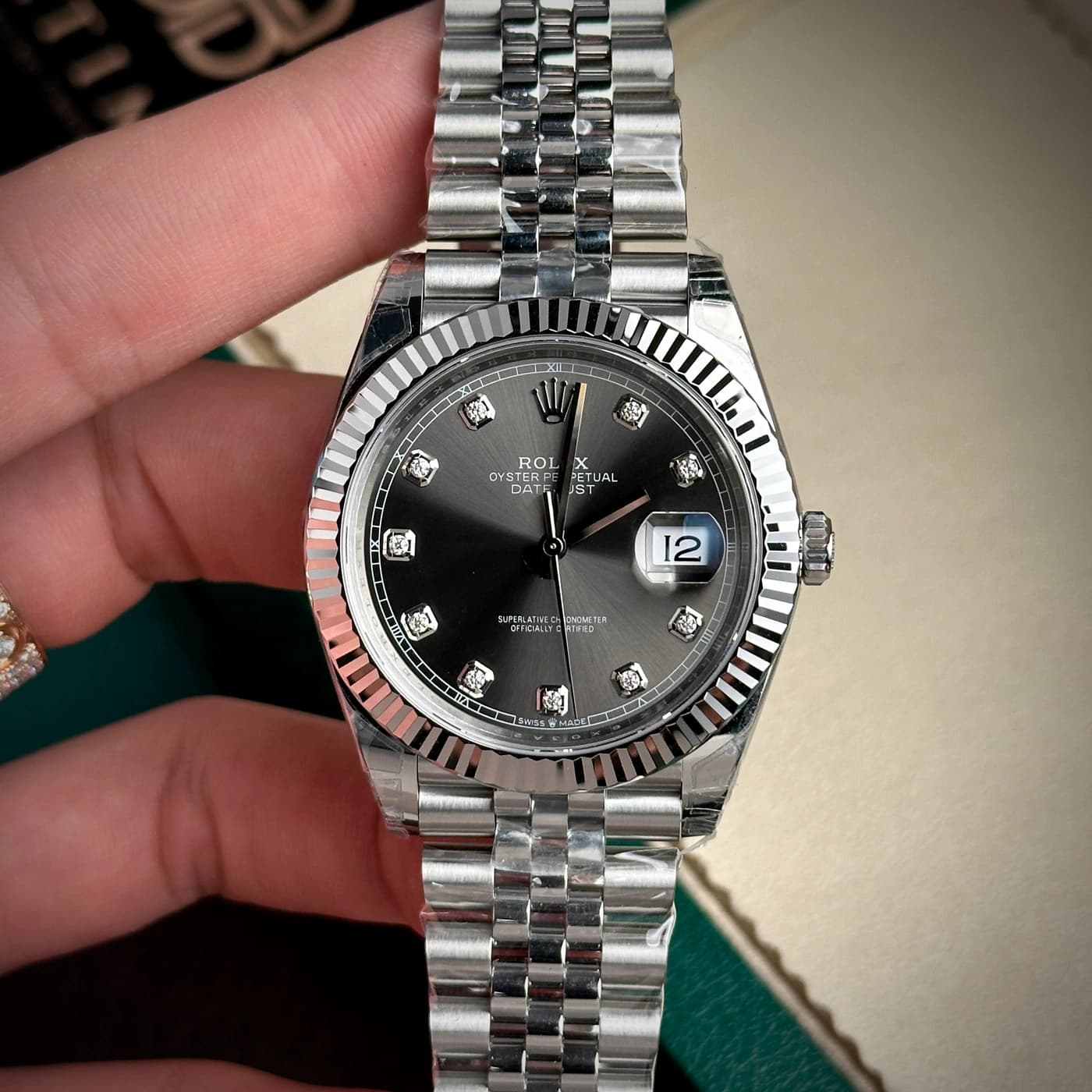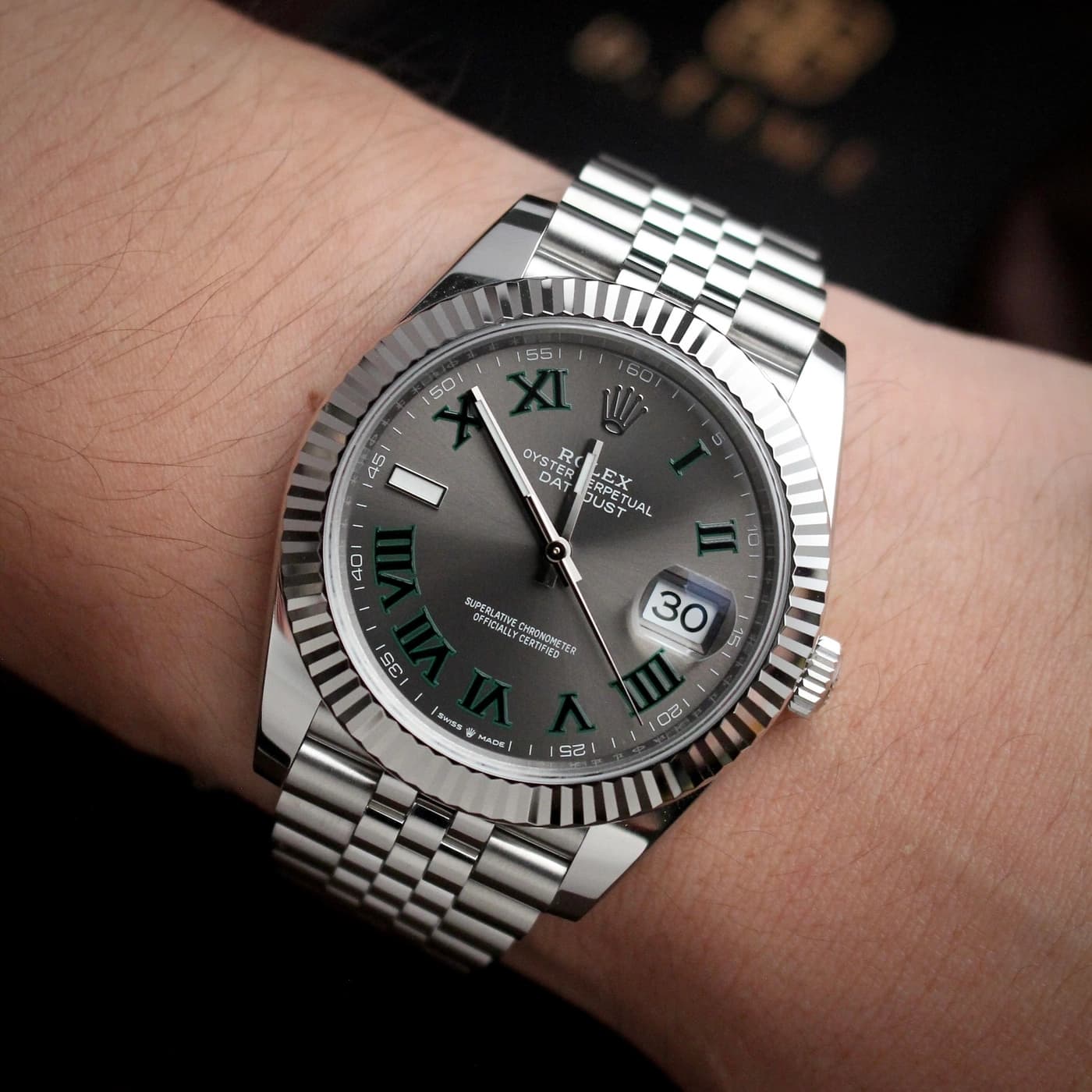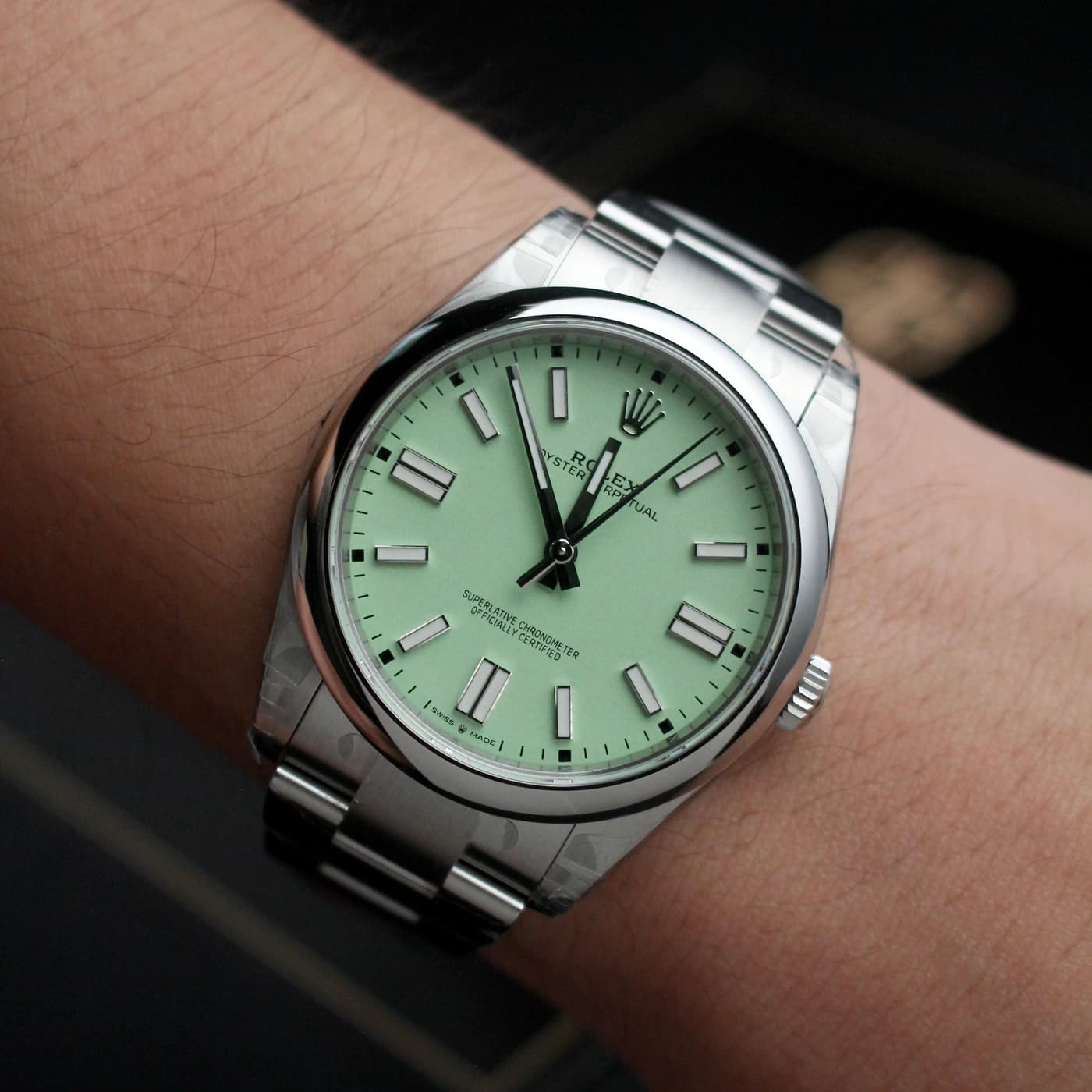
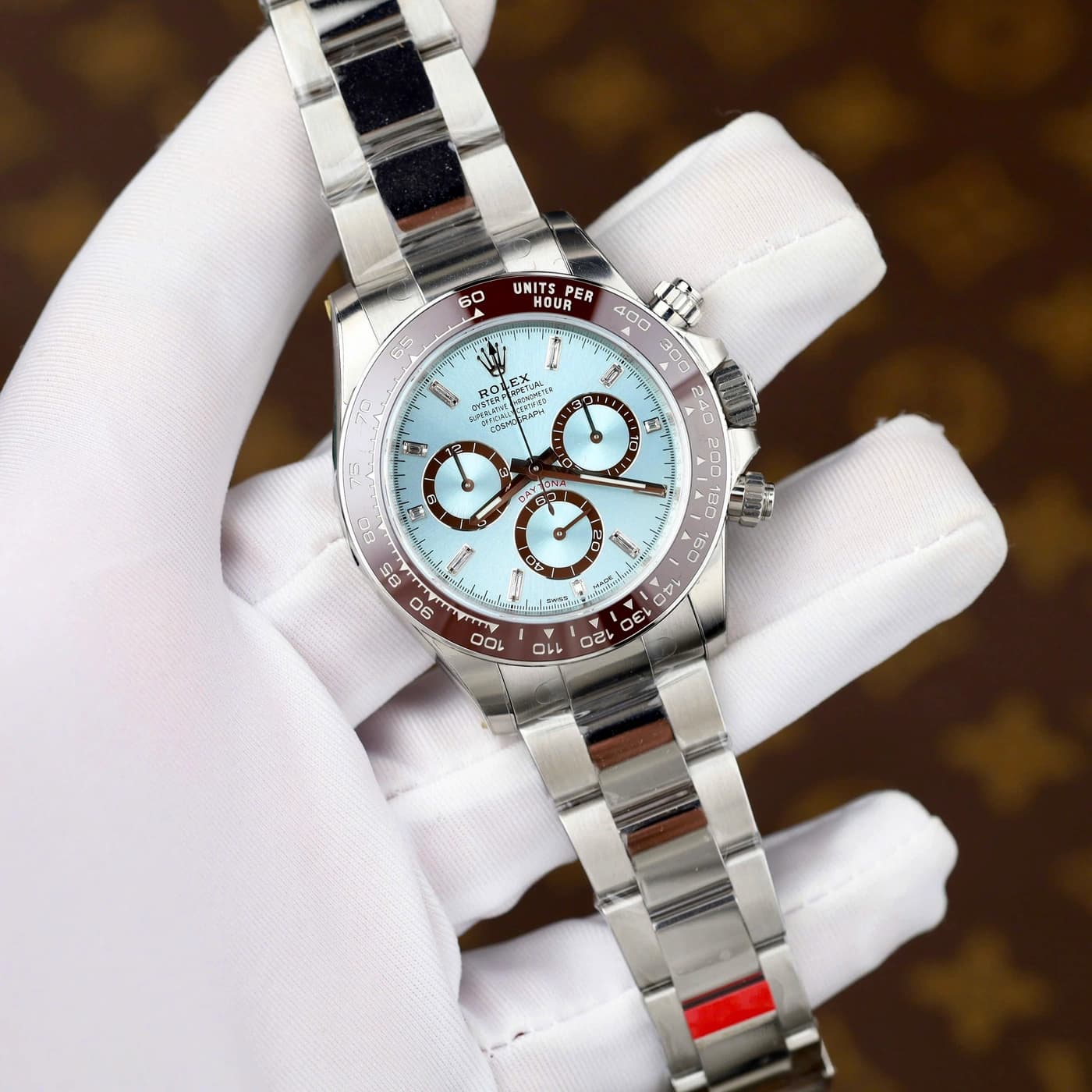
Rolex Cosmograph Daytona 40mm 126506 Ice Blue
$1,200
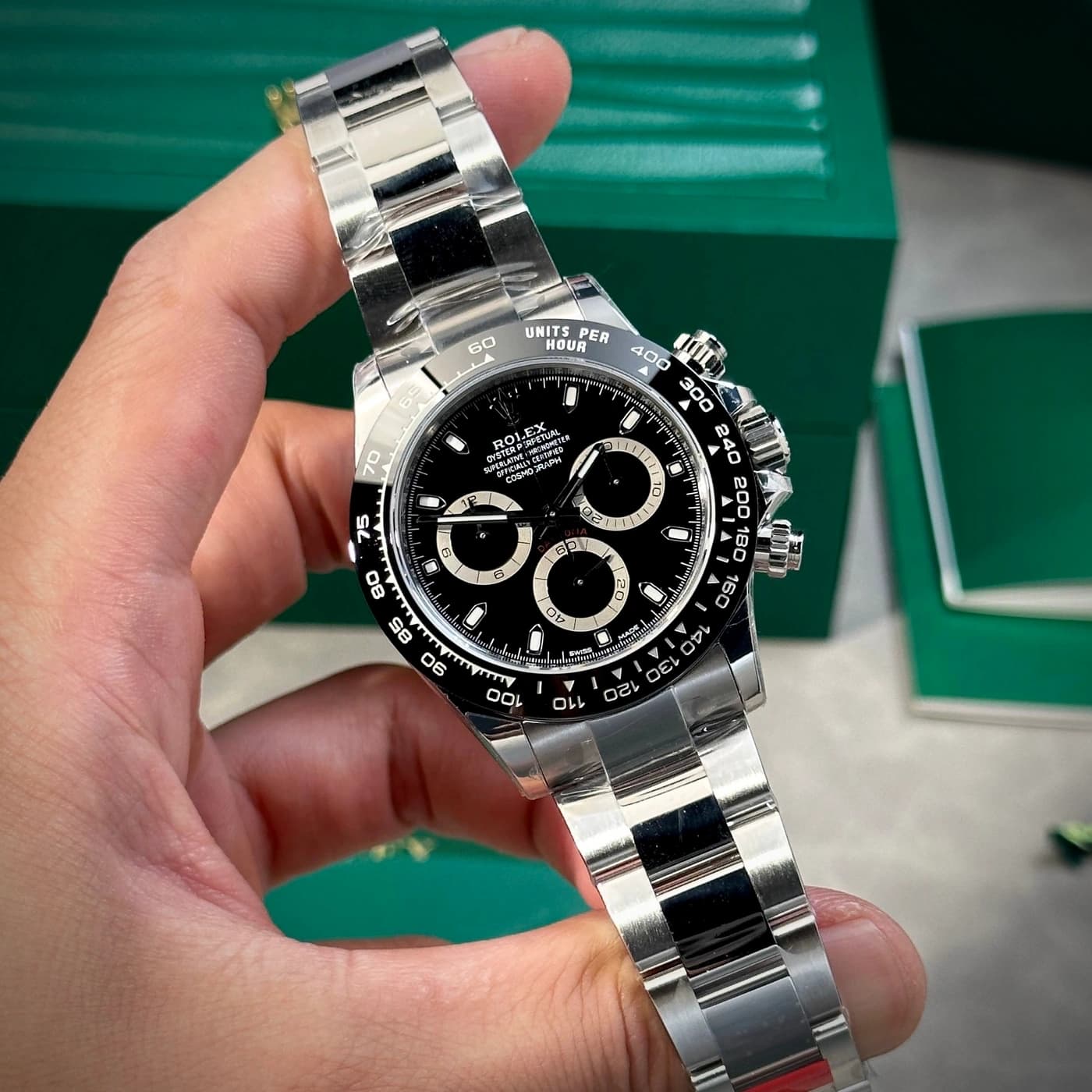
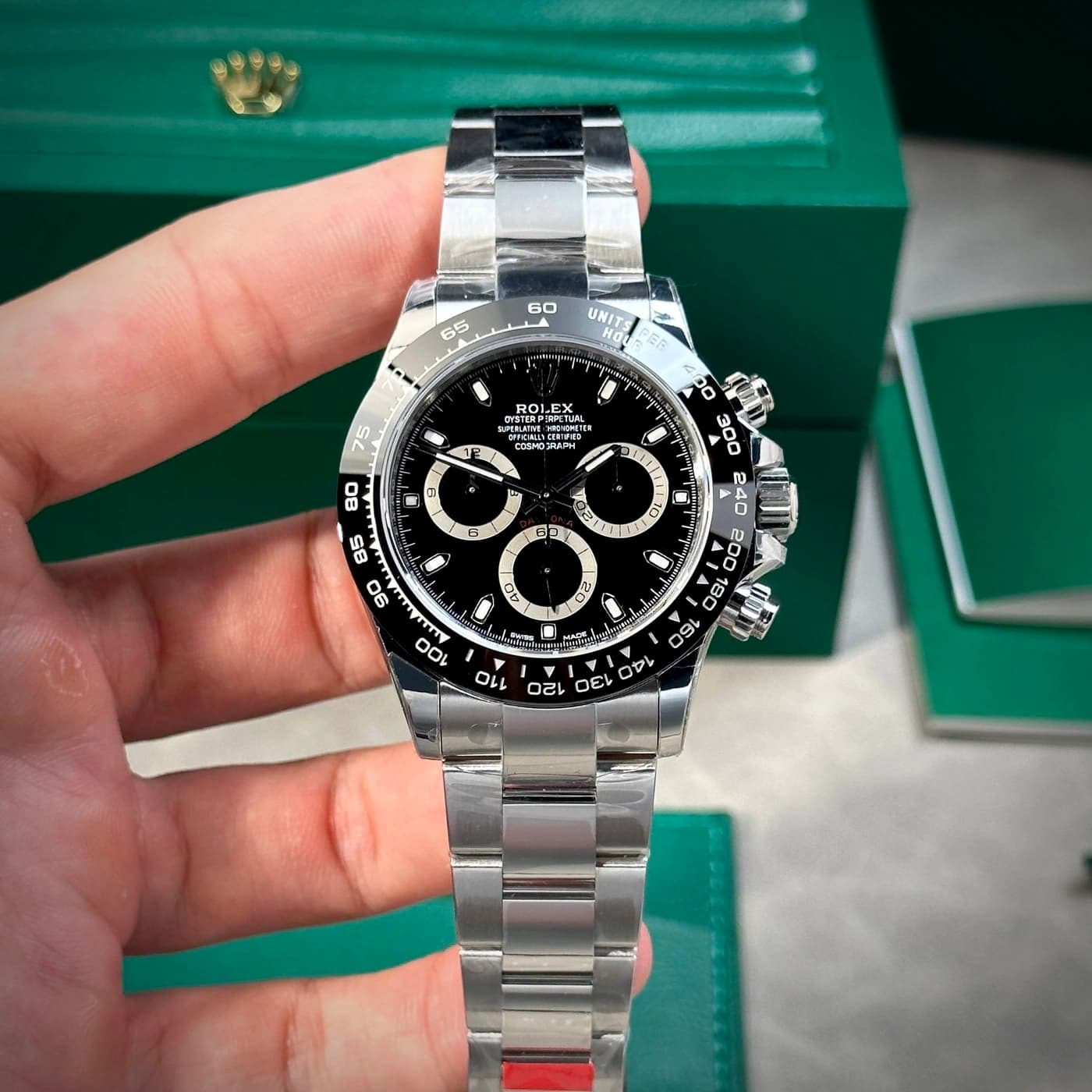
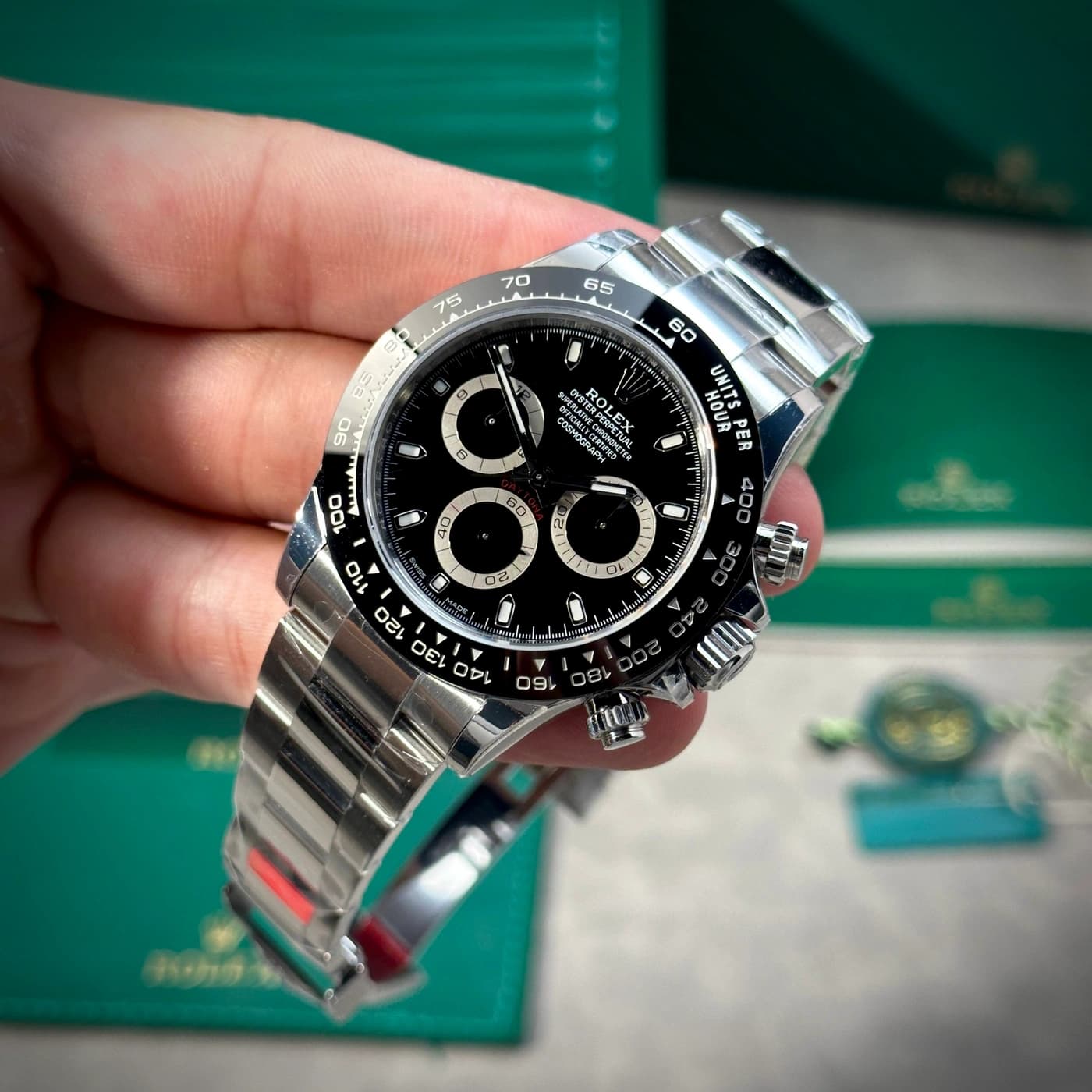
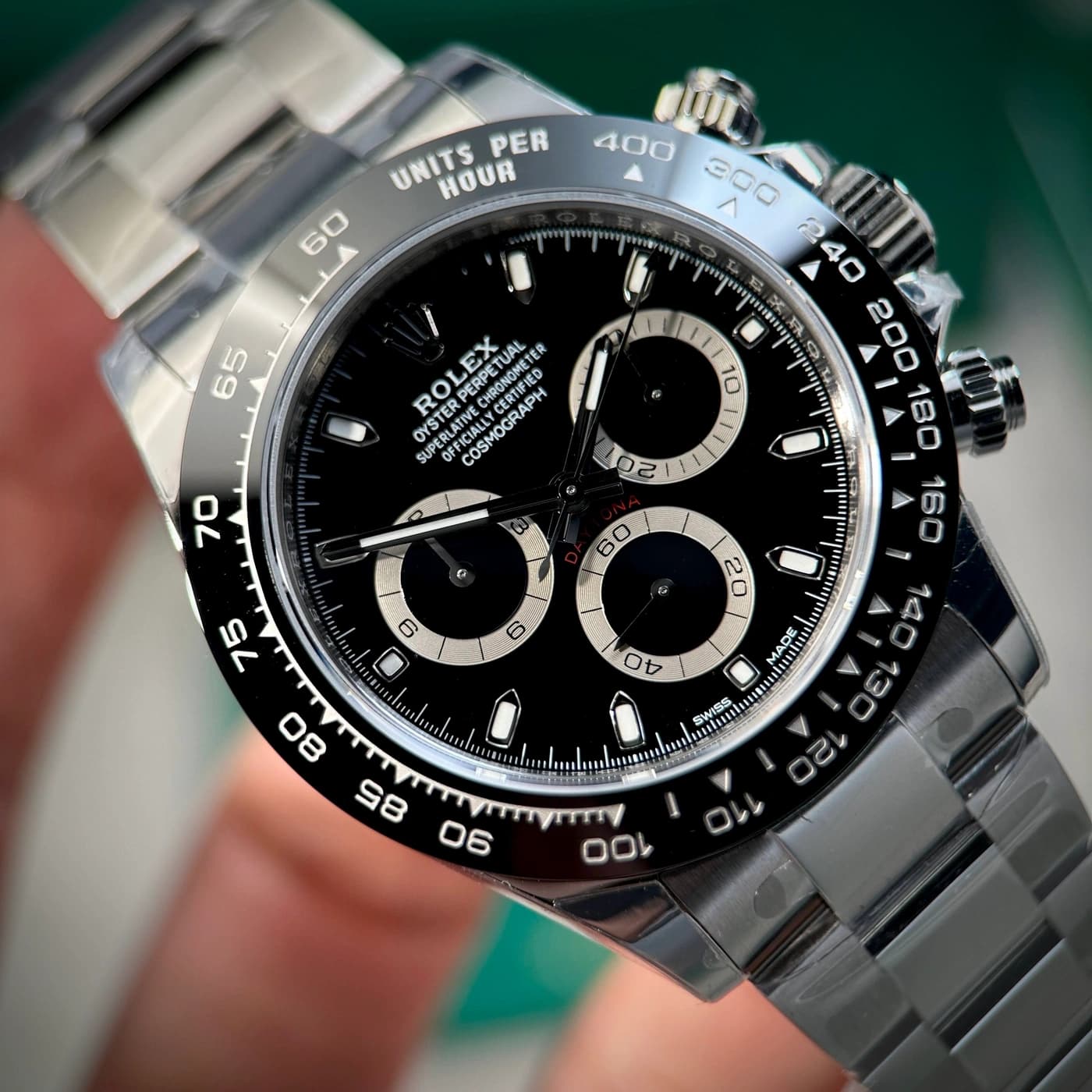
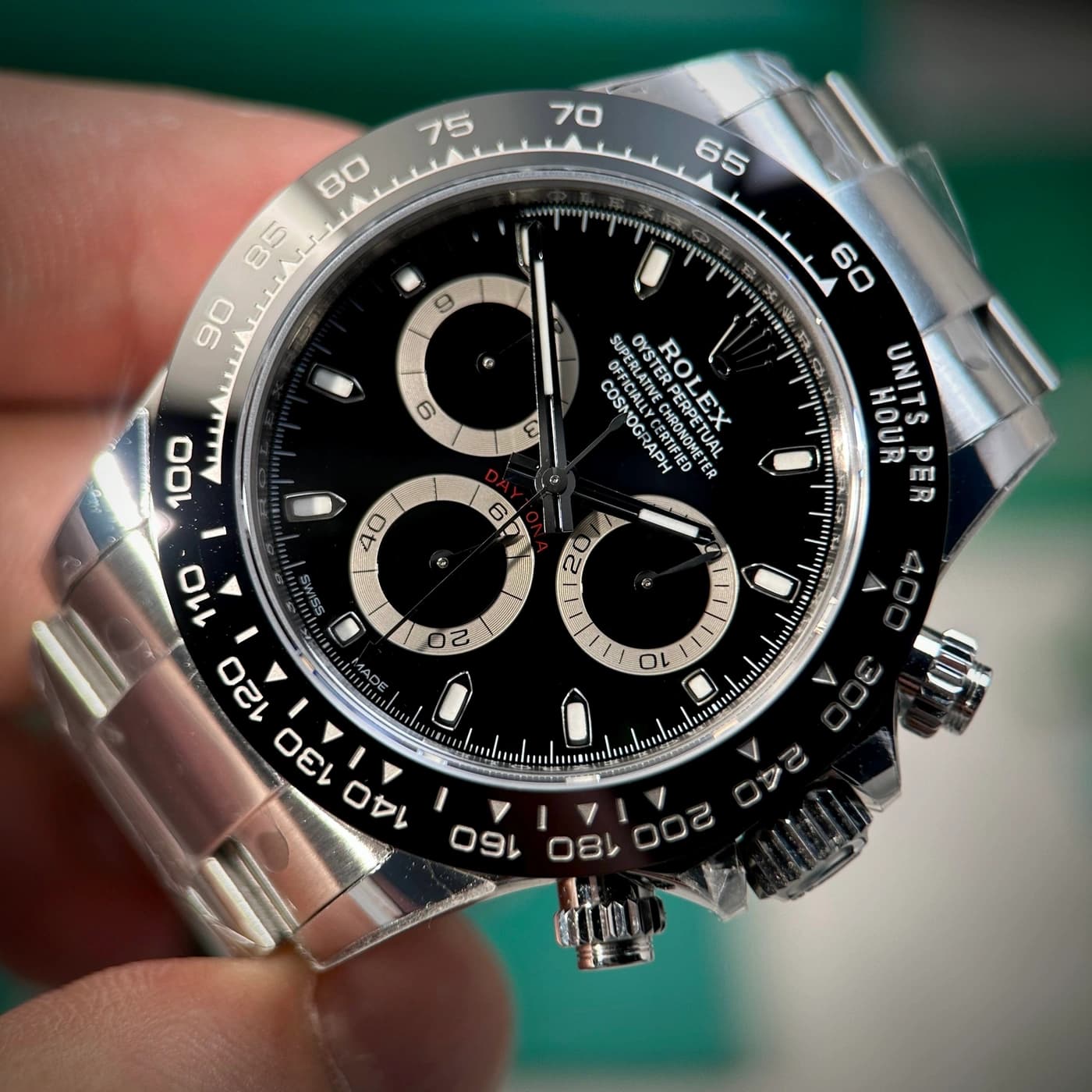
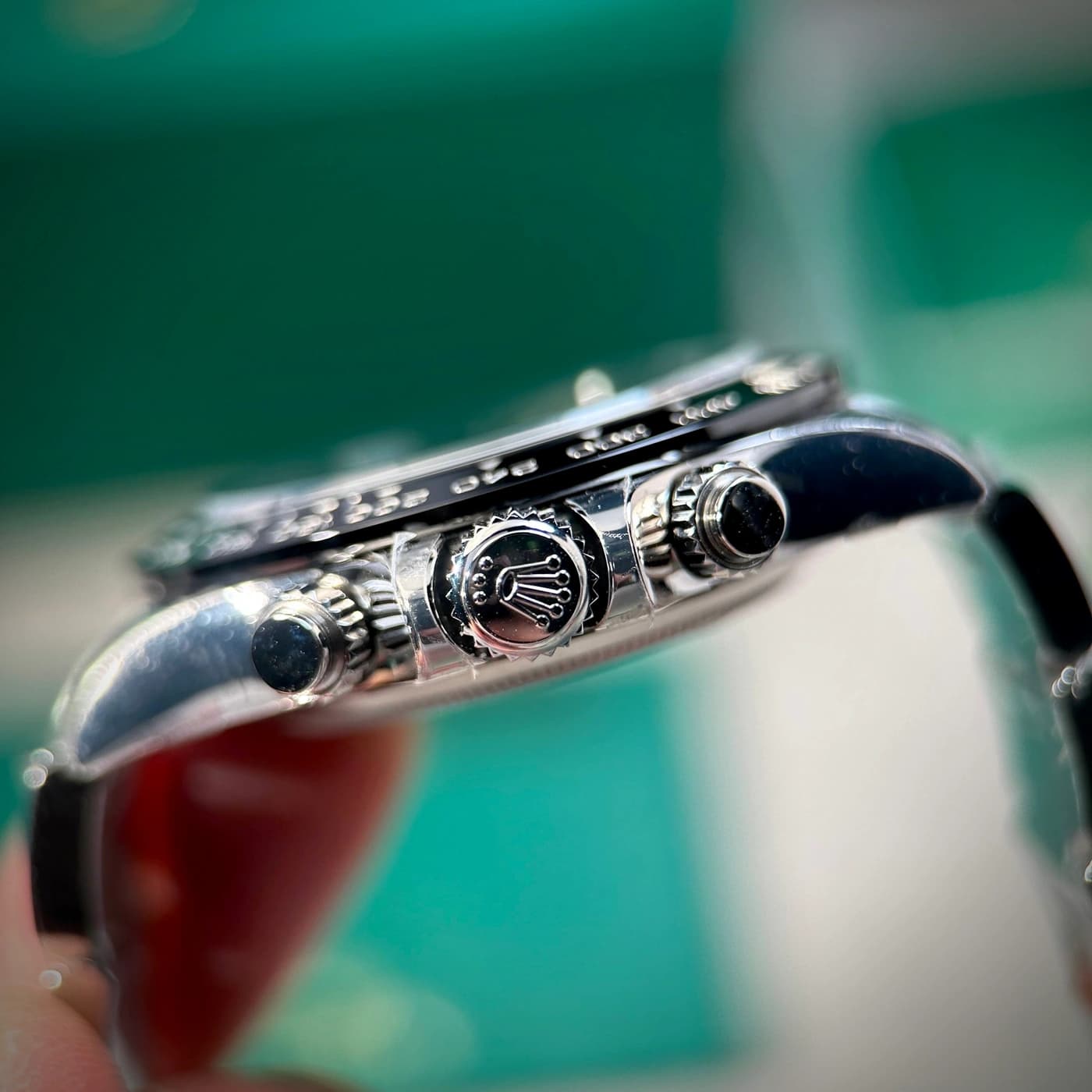
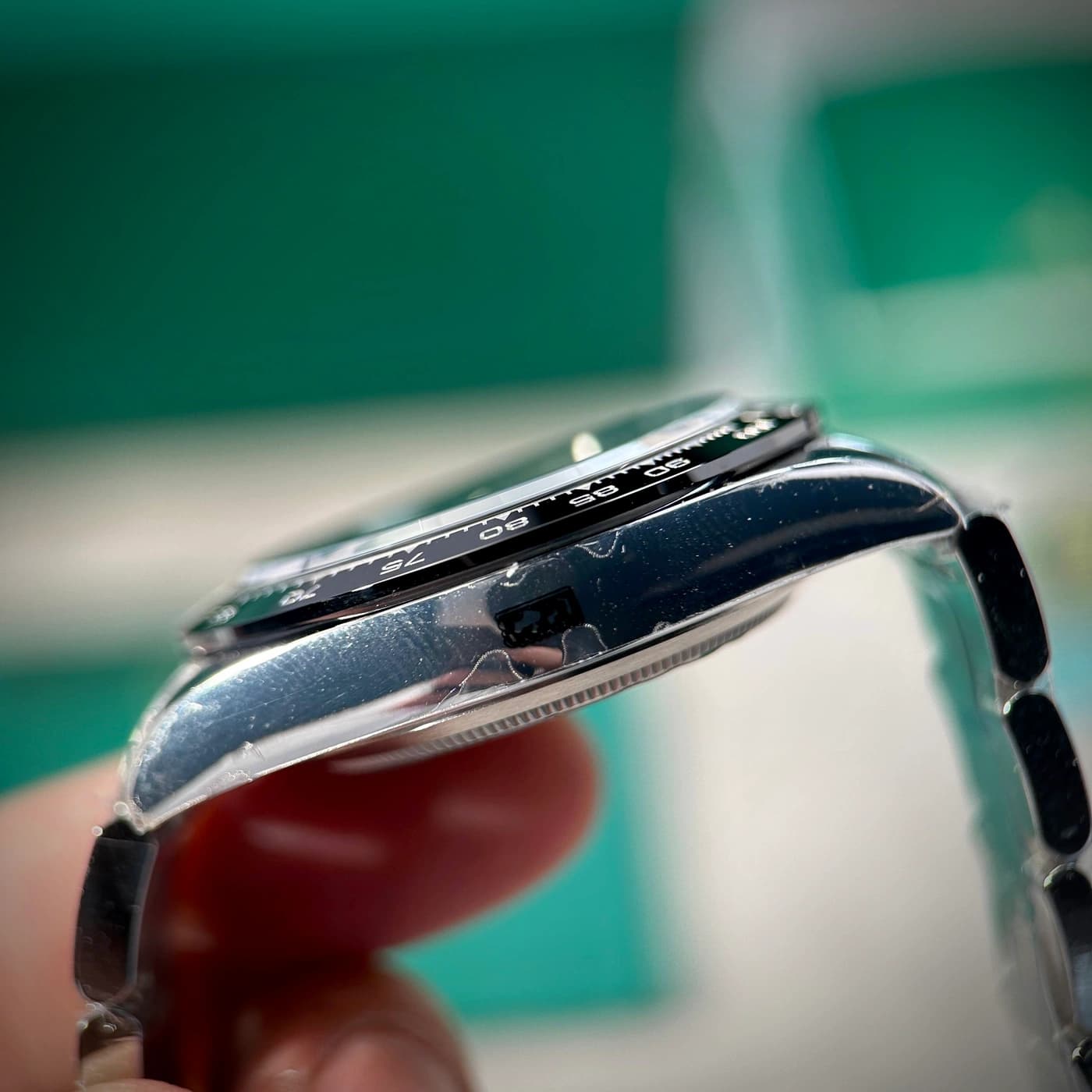
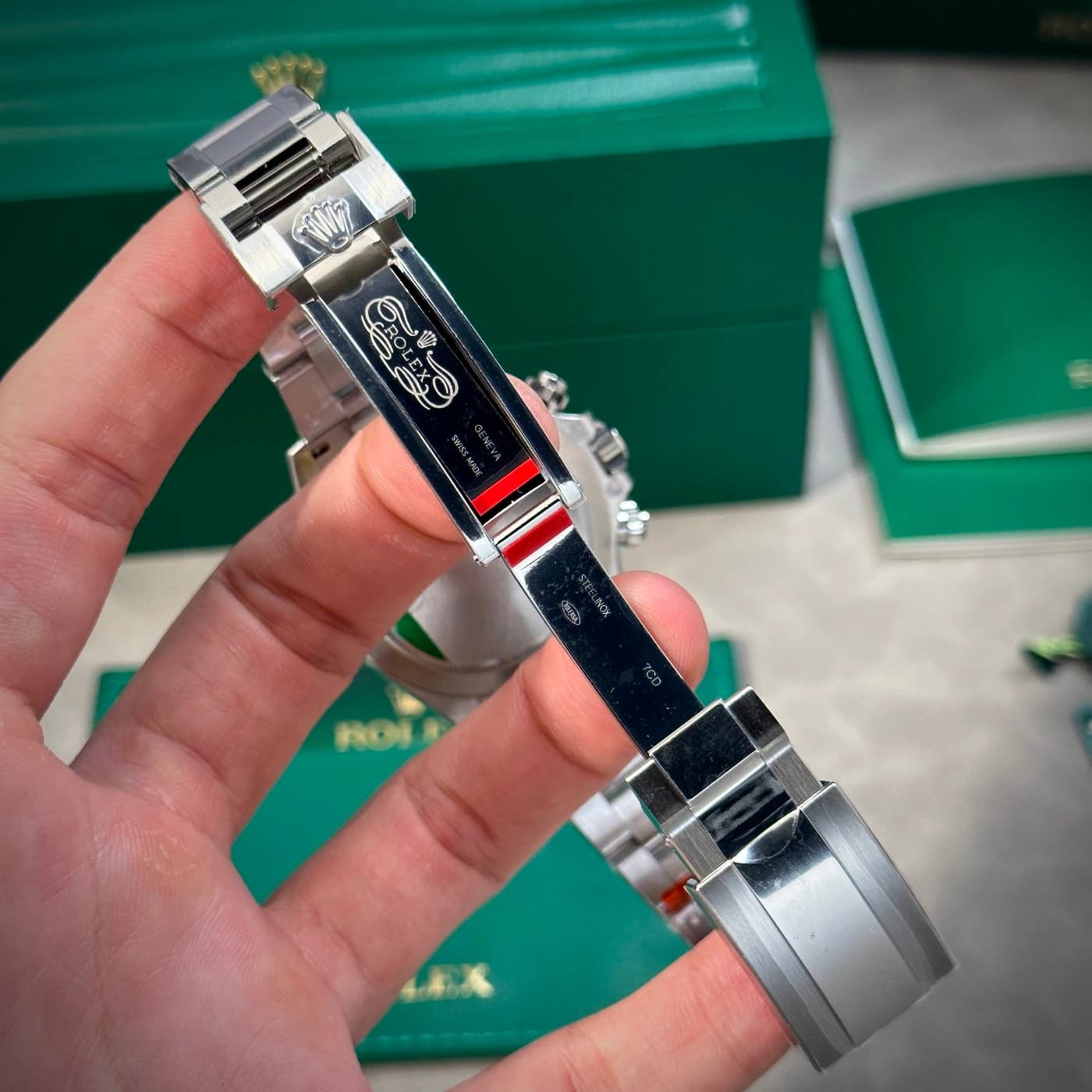
Rolex Cosmograph Daytona 126500LN Black Dial “Godzilla” 1:1 Replica Timepiece featuring a slim 40 mm × 12 mm 904L stainless-steel case, glossy black dial with steel-tone counter rings, black ceramic tachymeter bezel, Oyster bracelet and DD4131 Super Clone integrated chronograph with 70–72 hours of power reserve — expertly selected by D.Time to faithfully recreate the proportions, new-generation 126500 identity and mechanical chronograph experience of the Daytona.
Price on request
| Reference | 126500LN-0002 |
|---|---|
| Movement | DD4131 Super Clone integrated automatic chronograph, column-wheel and vertical-clutch architecture, 28,800 vph (4 Hz), 70–72 hours of power reserve, fully functional chronograph. |
| Case | 904L stainless steel with a black ceramic tachymeter bezel, polished steel outer edge, sapphire crystal and sapphire display caseback. |
| Dimensions | 40 mm with a slim 12 mm case profile. |
| Dial | Glossy black dial with steel/silver-tone chronograph counter rings, applied indices, blue Chromalight-style lume and red DAYTONA signature. |
| Strap / Bracelet | 904L stainless-steel Oyster 3-link bracelet with Oysterlock-style clasp and Easylink-style extension. |
| Water Resistance | 5 ATM. |
The Rolex Cosmograph Daytona 126500LN-0002 succeeds the 116500LN while retaining the iconic formula of the steel Daytona and refining several important elements: case profile, bezel architecture, counter-ring proportions, hour markers and the Calibre 4131 movement.
In the Black Dial configuration commonly known within the community as “Godzilla,” the design is built around the interaction between a glossy black dial, steel-tone counter rings, black ceramic tachymeter bezel and Oystersteel-style construction. Unlike the Panda, Godzilla relies less on strong black-and-white contrast and more on black-dial depth, metallic subdial highlights and the transition between ceramic and steel.
The version selected by D.Time combines a slim 40 mm × 12 mm 904L stainless-steel case, glossy Black Dial, black ceramic tachymeter bezel, sapphire display caseback, Oyster bracelet and DD4131 Super Clone integrated automatic chronograph — creating a configuration focused equally on appearance, proportions, wrist feel and the mechanical chronograph experience of the 126500 generation.
The first important distinction is that 126500LN belongs to the Calibre 4131 generation, rather than the previous 116500LN platform based around the 4130.
The two generations share closely related design language, but the 126500 introduces several refinements. Counter rings are slimmer, hour markers are updated, case proportions are revised and the ceramic bezel is surrounded by a thin polished metal outer edge.
Individually these changes may appear subtle, but together they define the new 126500 identity. A high-quality version therefore needs to recreate the correct generation rather than simply adapting the appearance of the earlier 116500.
The case uses 904L stainless steel, measures 40 mm in diameter and maintains a slim 12 mm profile.
Thickness is particularly important on the Daytona because the movement inside is an integrated automatic chronograph containing significantly more mechanical architecture than a conventional three-hand movement.
Maintaining a 12 mm profile allows the timepiece to remain compact on the wrist while preserving the sporting yet refined proportions associated with the Daytona.
This is also one of the strengths of the DD4131 platform: full chronograph functionality can be maintained without requiring an excessively thick case.
At the center of the configuration is a glossy black dial with steel/silver-tone chronograph counter rings.
The dial is not simply a flat black surface. Its glossy finish develops depth as lighting changes, while the metallic counter rings create distinct reflective boundaries around the three subdials.
White printing, polished applied indices and the red DAYTONA signature above 6 o'clock introduce smaller but clearly defined points of contrast.
Black Dial quality therefore depends heavily on black depth, surface gloss, counter-ring tone and finishing, printing quality and index alignment.
One of the most recognizable changes from the 116500 to the 126500 is the use of slimmer chronograph counter rings.
This is particularly visible on Godzilla because the metallic rings sit directly against the black dial. Rings that are too thick can make the dial resemble the previous generation and give the subdials a visually heavier appearance.
The selected 126500 version follows the newer geometry with slimmer counter rings, creating a more open and balanced dial composition.
D.Time pays particular attention to ring thickness, concentricity, finishing, subdial printing and subdial-hand centering.
The black ceramic tachymeter bezel forms the strongest visual frame around the Godzilla dial.
Its tachymetric scale extends to 400 units per hour, maintaining the speed-measuring function historically associated with the Cosmograph Daytona's motorsport identity.
On a high-quality version, execution depends on ceramic surface quality, engraving definition, infill tone, 60/12 alignment and consistent spacing across the complete tachymeter scale.
The black ceramic also creates a natural transition from the glossy black dial before meeting the contrasting steel exterior.
The 126500 changes the relationship between the ceramic bezel and case by introducing a thin polished steel outer edge around the ceramic section.
On Godzilla, this detail is especially visible because it creates a fine line of reflected light between the black ceramic and steel case.
The front therefore develops several visual layers: glossy black dial → steel counter rings → black ceramic bezel → polished steel outer edge → 904L steel case.
It is a small detail, but an important one when evaluating whether a version accurately reflects the 126500 generation.
The Black Dial configuration is particularly sensitive to crystal quality because unwanted haze and reflections become more noticeable against a dark background.
A clear sapphire crystal allows the black lacquer-style surface, polished indices and metallic counter rings to remain visually direct, giving the dial greater apparent depth.
D.Time therefore evaluates sapphire not only as a protective component but also for clarity, reflections and the way it presents the dial under different viewing angles.
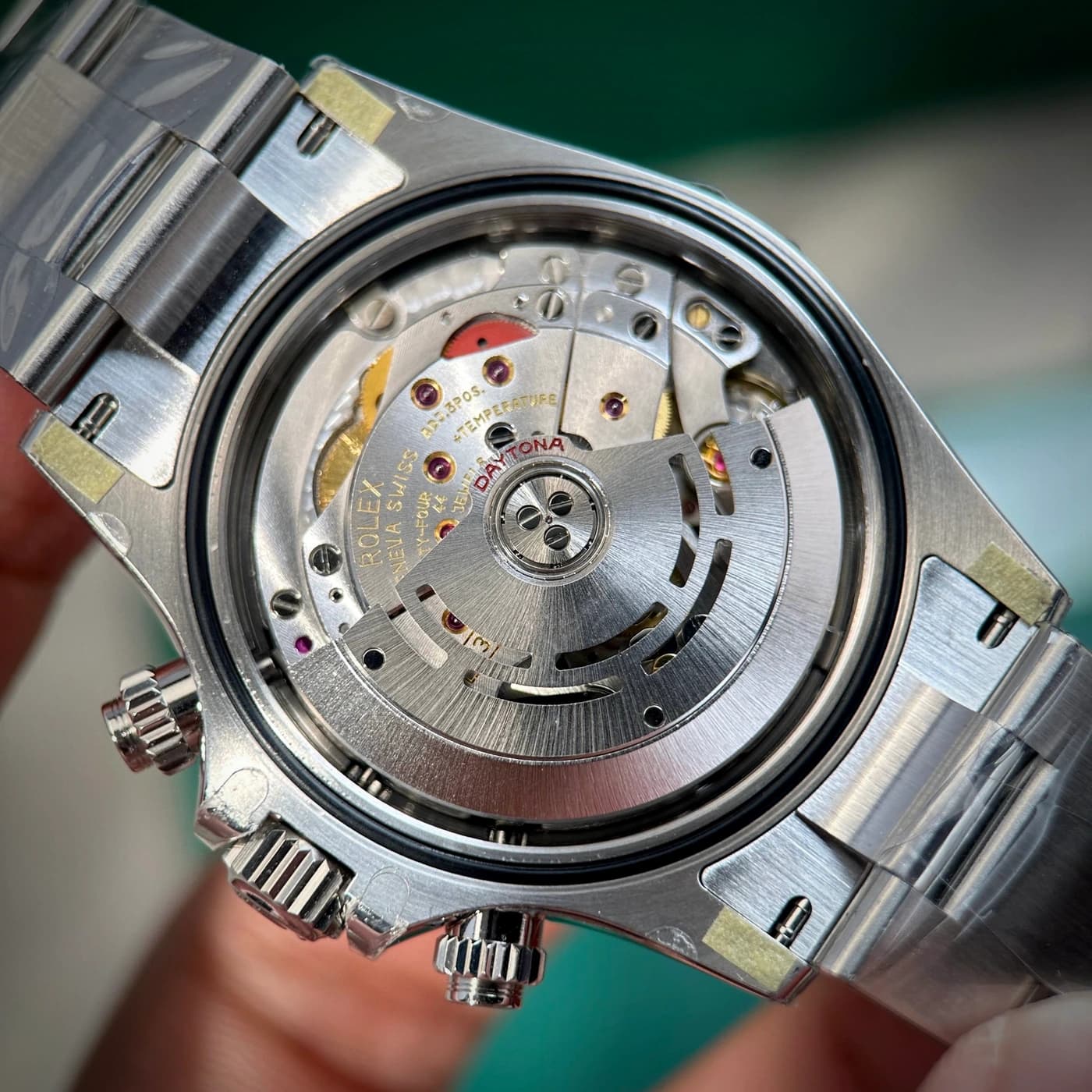
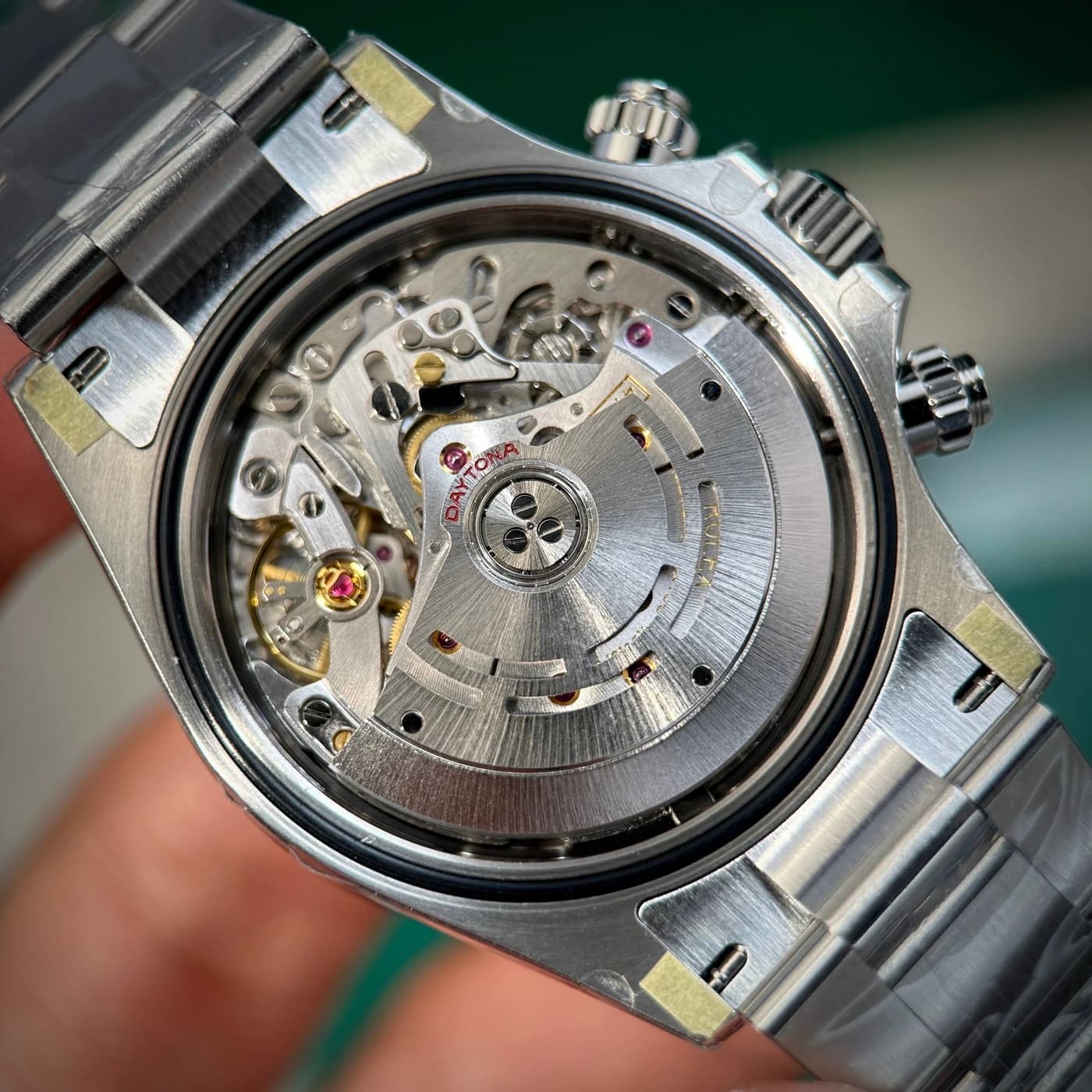
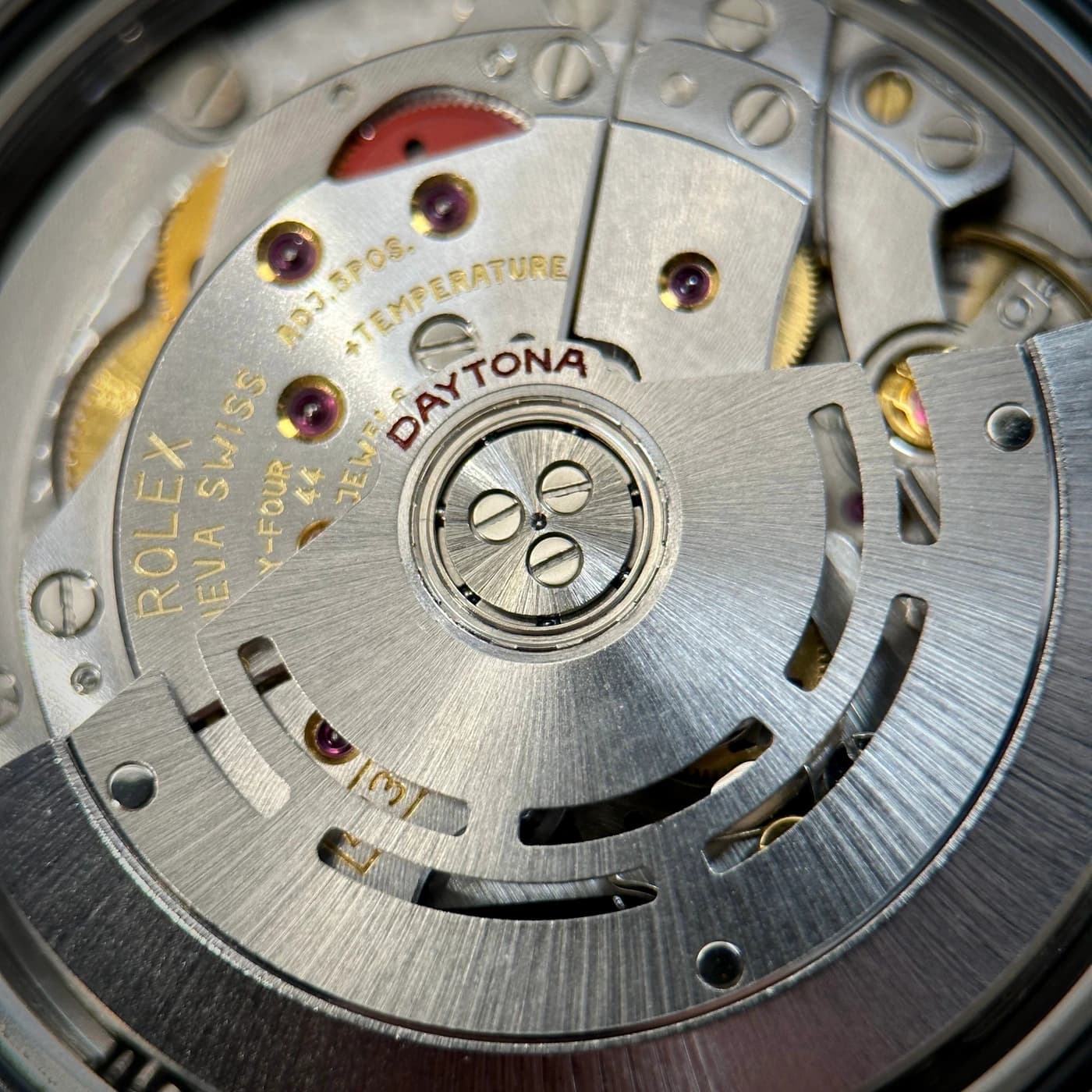
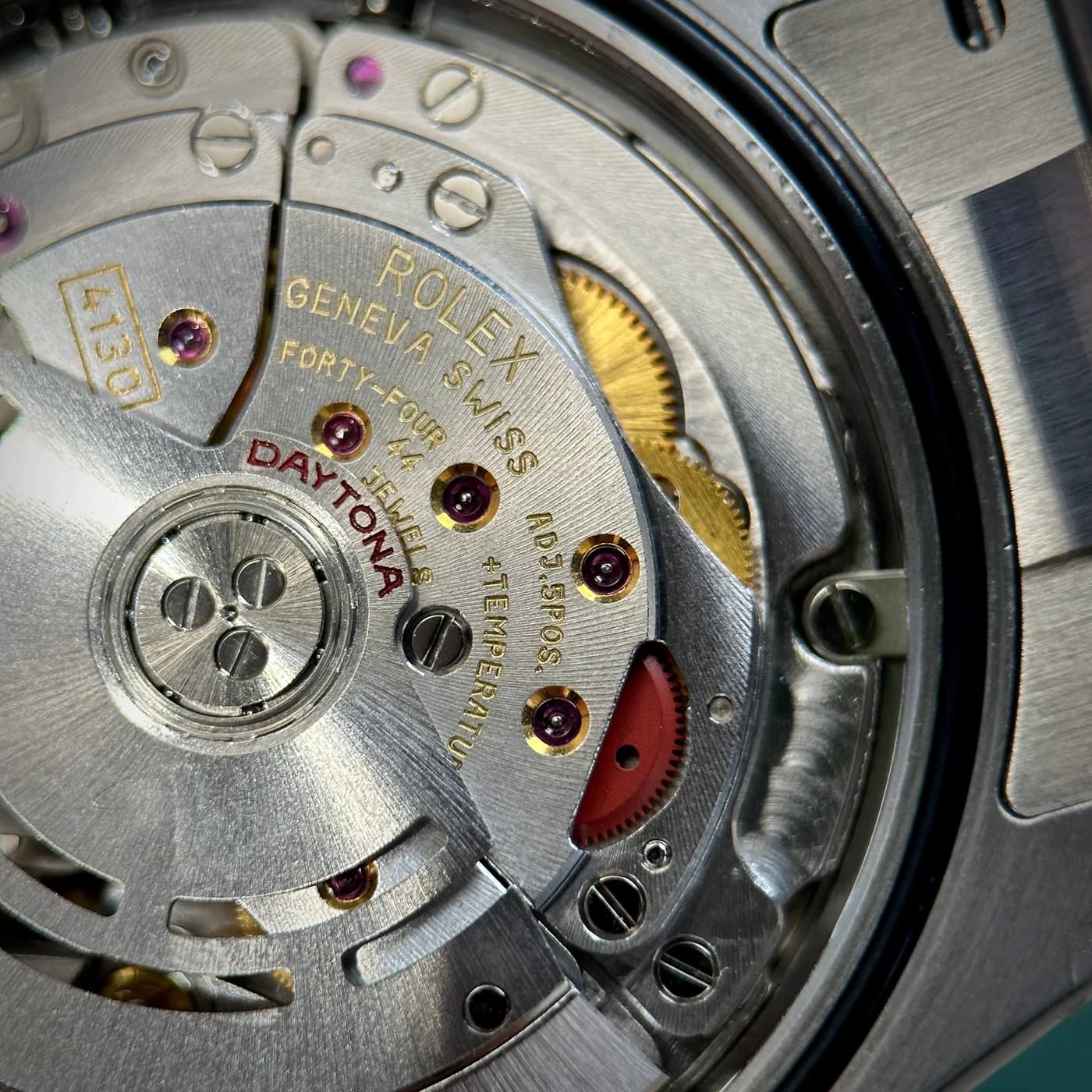
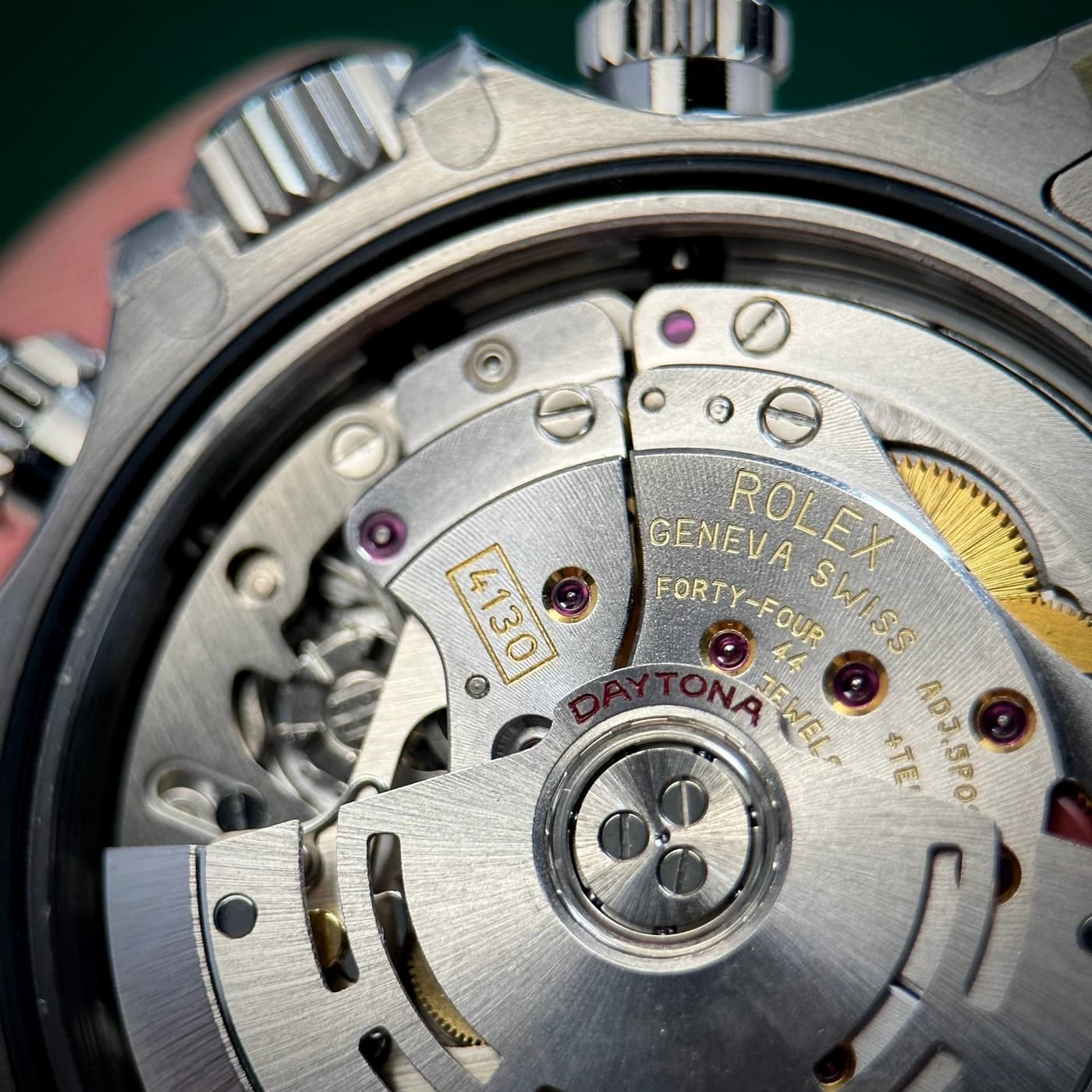
Inside is the DD4131 Super Clone, an integrated automatic chronograph operating at 28,800 vph / 4 Hz with 70–72 hours of power reserve.
The important distinction is its integrated chronograph architecture. Rather than starting with a conventional movement and repositioning the subdials beneath decorative architecture, the DD4131 is built around Daytona-style chronograph operation.
The movement drives central chronograph seconds, a 30-minute counter at 3 o'clock, a 12-hour counter at 9 o'clock and small seconds at 6 o'clock, with fully functional start, stop and reset operation.
This is one of the most important elements in recreating the Daytona experience: the chronograph is not merely represented on the dial but becomes an actual part of the mechanical interaction.
The DD4131 uses column-wheel and vertical-clutch architecture, two components that directly influence chronograph operation.
The column wheel manages start, stop and reset logic, while the vertical clutch transfers power to the central chronograph seconds.
In actual use, the chronograph hand should start cleanly, run consistently, stop correctly and reset precisely to 12 o'clock.
This is why D.Time evaluates the chronograph through actual operation rather than simply confirming that the subdials move.
The DD4131 provides 70–72 hours of power reserve, offering extended autonomy for an integrated automatic chronograph.
In everyday use, this allows the timepiece to continue operating through longer periods off the wrist without requiring frequent time resetting.
Combined with automatic winding, it preserves the practicality expected from a daily-wear sports chronograph while providing considerably more mechanical complexity than a conventional three-hand movement.
The movement operates at 28,800 vph / 4 Hz, providing smooth seconds and chronograph-hand motion while creating a strong foundation for regulation.
Real-world 2026 QC examples in the supplied research recorded approximately -3 to +4 seconds per day, 265–279° amplitude and around 0.1 ms beat error. One individual example recorded -2 seconds per day, 265° and 0.1 ms.
D.Time does not treat these results as guaranteed performance for every DD4131, but they demonstrate strong regulation potential when an individual movement is correctly assembled and adjusted.
The operating condition of the exact movement is therefore evaluated before delivery rather than using one QC result to represent every timepiece.
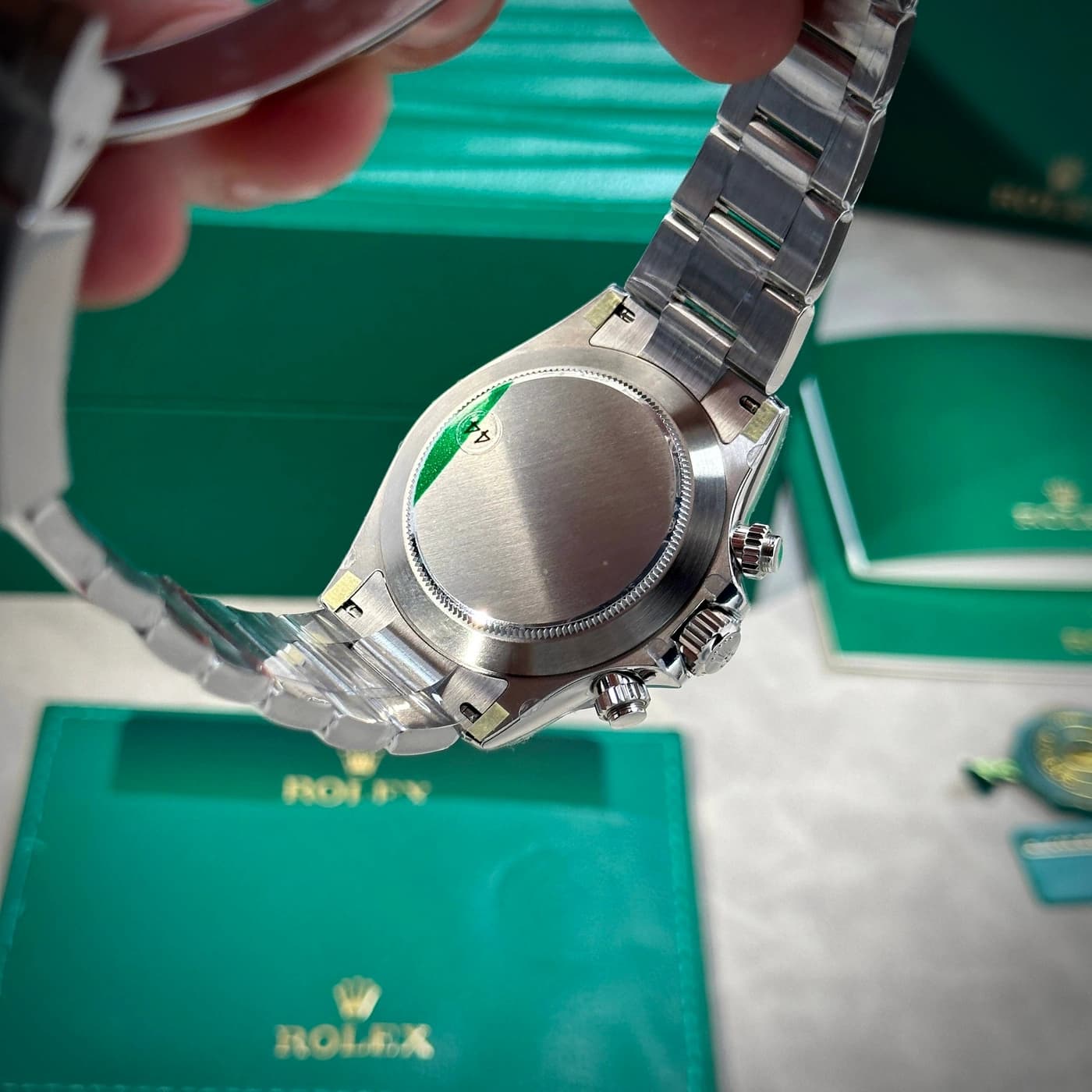
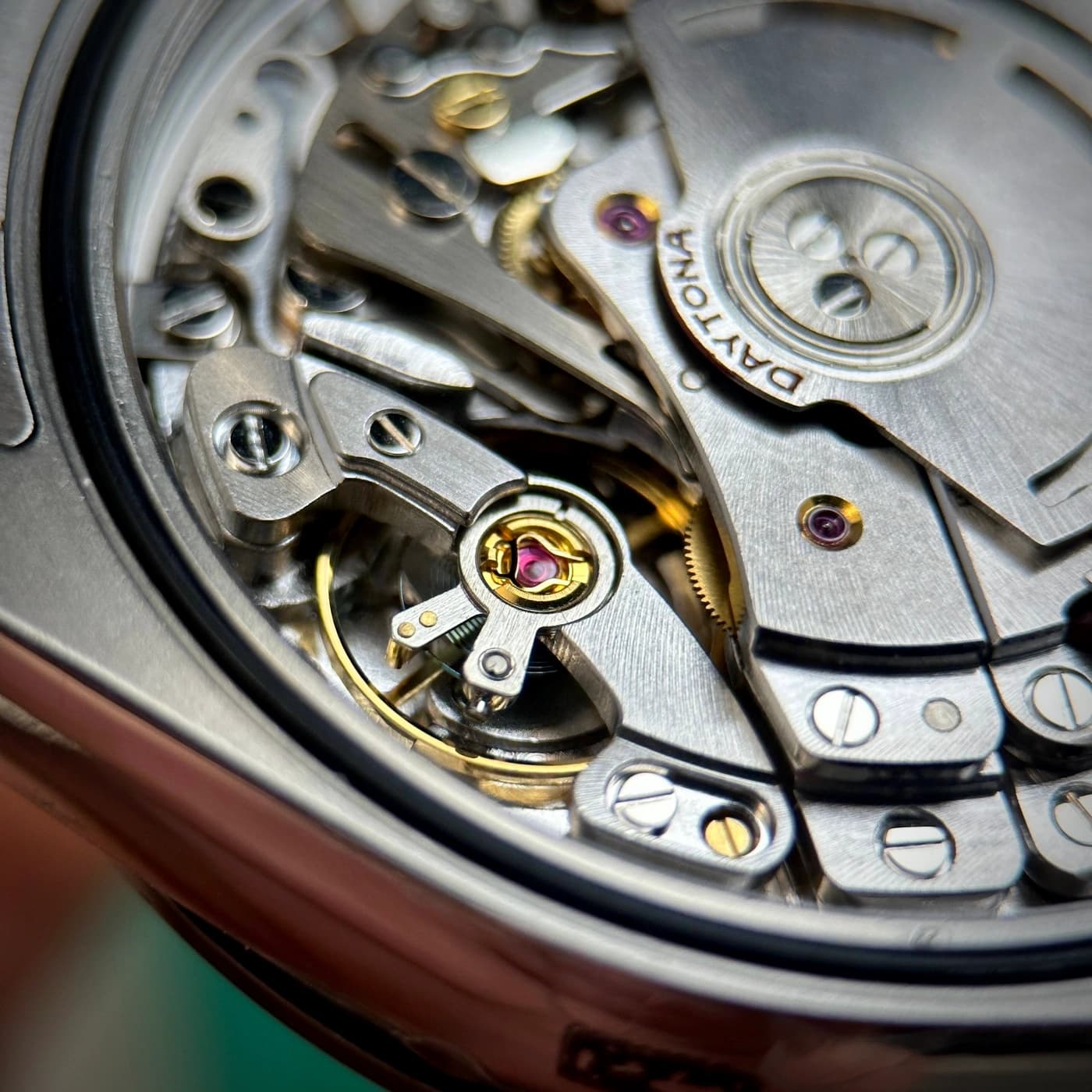
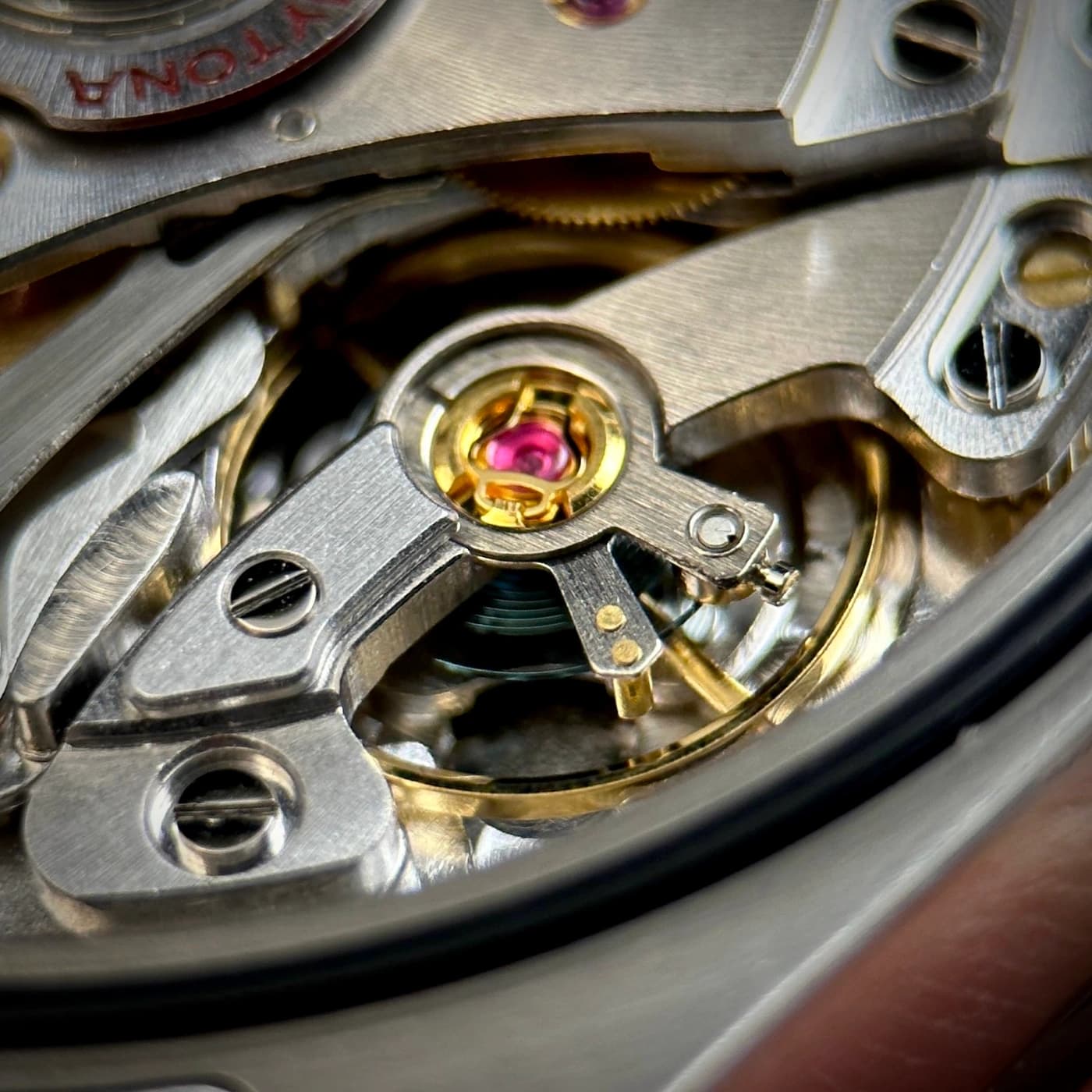
An important characteristic of the 126500 generation is its sapphire display caseback, allowing the movement to be viewed directly from the rear.
This means movement quality is no longer evaluated purely through function. Bridge layout, rotor execution, engraving, jewel placement and finishing cleanliness all become visible elements of the timepiece.
DD4131 architecture and rear-side finishing therefore play a more significant role than on Daytona generations with a solid caseback.
D.Time evaluates the visible movement through the sapphire caseback as part of the complete inspection process rather than focusing exclusively on the dial and bezel.
The version uses a 904L stainless-steel Oyster 3-link bracelet with an Oysterlock-style clasp and Easylink-style extension.
Its larger three-link architecture provides a solid and sporting wrist character that naturally complements the motorsport identity of the Daytona.
The Easylink-style extension also provides quick adjustment for greater comfort as wrist size changes throughout the day.
D.Time focuses on SEL fit, bracelet articulation, clasp operation, finishing and consistency between polished and brushed surfaces on each individual timepiece.
One actual VSF 126500LN Black DD4131 example in the 2026 QC data measured 141.1 g. At the same time, the market also includes configurations promoted as “Gain Weight 185g.”
D.Time does not treat additional weight as an automatic advantage.
The original 126500LN is a steel Daytona rather than a platinum or gold model that requires additional mass to recreate the wrist feel of a precious-metal construction.
The selection priority therefore remains proportions, construction, balance and appropriate wrist feel, rather than pursuing a larger gram figure simply because it is marketed as “Gain Weight.”
The Daytona requires a different QC process from a conventional three-hand timepiece because the chronograph is fundamental to the product.
D.Time evaluates the complete start → run → stop → reset sequence, observing the central chronograph hand, subdial counters and their ability to return correctly to zero.
Exterior inspection also focuses on 3/6/9 marker alignment, Rolex coronet, rehaut, bezel 60/12 alignment, counter-ring concentricity, subdial-hand centering, SEL and clasp.
This matters because the supplied 2026 QC data shows that small index-alignment variations can still occur between individual pieces even when the overall version provides strong execution.
The version supplied by D.Time features 5 ATM water resistance, providing practical protection against normal everyday contact with water.
With a chronograph construction using a screw-down crown and pushers, D.Time still recommends avoiding prolonged immersion and underwater activities to better preserve sealing performance and movement condition over time.
The value of this version comes from consistency across generation-specific architecture, exterior execution and mechanical performance.
The slim 40 mm × 12 mm 904L stainless-steel case maintains the compact Daytona profile.
The glossy Black Dial + steel-tone counter rings create the characteristic Godzilla depth while using the slimmer counter-ring proportions associated with the 126500 generation.
The black ceramic tachymeter bezel + polished steel outer edge recreate one of the most important visual changes introduced when the Daytona moved from 116500 to 126500.
The sapphire display caseback makes the movement a direct part of the visual experience.
Most importantly, the DD4131 Super Clone integrated automatic chronograph combines column-wheel and vertical-clutch architecture, 4 Hz operation and 70–72 hours of power reserve to provide a mechanical foundation appropriate to the Calibre 4131-generation Daytona.
Together, these characteristics create consistency across appearance, proportions, wrist feel, movement architecture and chronograph operation — precisely the qualities D.Time prioritizes when selecting a High-End Replica Timepiece.
The appeal of Godzilla lies in the way an almost entirely black color palette still produces multiple visual layers.
The glossy black dial responds differently to light than the black ceramic bezel. Steel counter rings introduce depth across the three subdials. Polished indices and the steel outer bezel edge create sharper highlights, while the Oyster bracelet maintains the strong sporting character.
It is a Daytona configuration for those who want a stronger, darker presence while retaining the versatility of a steel sports chronograph.
It is also a clear expression of D.Time's approach to a High-End Replica Timepiece: faithfully recreating the appearance, proportions, material character, wrist feel and mechanical experience of the original design.
Each Timepiece is individually inspected by D.Time before delivery, with detailed photos and videos of The Exact Timepiece You Will Receive.